



JOEPRO
Member
- Messages
- 5,460
- Location
- UK
The Owon HDS272S oscilloscope will be a useful tool for you, and being battery-powered and in a plastic case, there are no concerns about accidentally shorting mains voltages on inverters to ground with the probe "earth" clip!
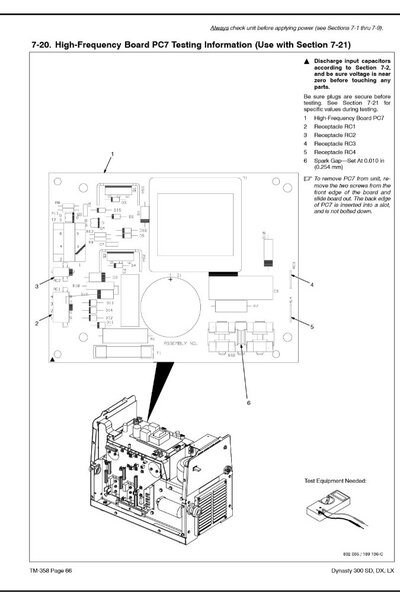
If the precharge timer control circuit on Page 92 of the Service Manual does apply to your machine, only transistor Q28 is involved.
Transistor Q27 is in a Darlington Pair with Q29 on Page 94.
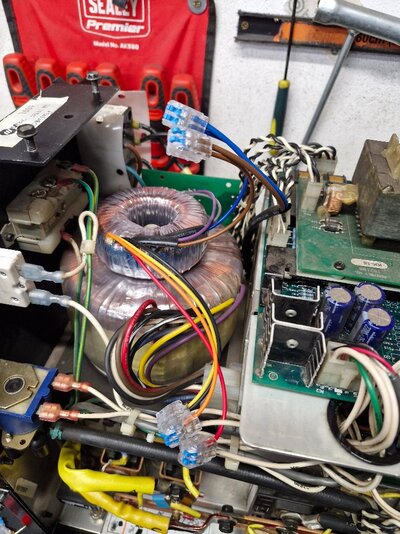
However: diode D44, just above Q27, does not look too good? It is a Zener diode, part of the Error and Compensation Amplifier on Page 95. It should test as a normal diode, conducting one way and blocking the other way, until a specific ( but unknown... ) Zener reverse voltage is reached, when it will break down and conduct in reverse.
Checking further the 2nd one looks OK visually at least.
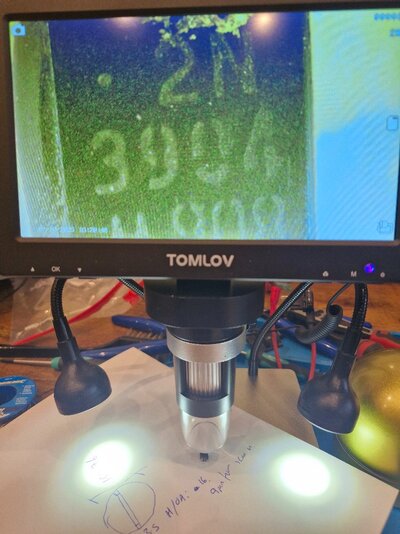
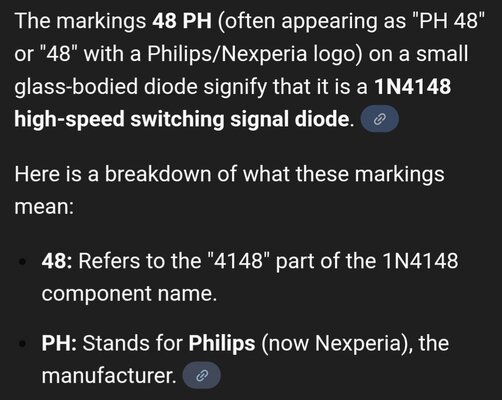
They are all the same values accross this bpard, this photo is just confirmimg the spec of these zenor diodes- 48 PH
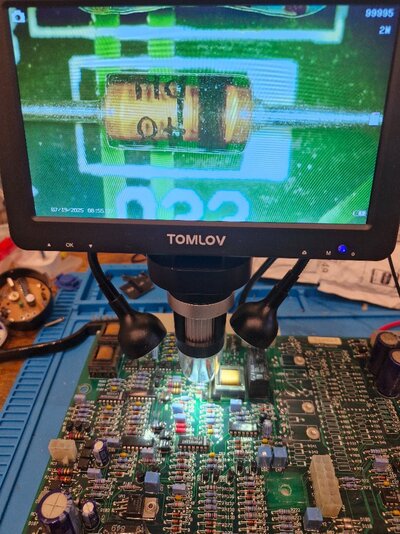
The other old one I blew was the same zenode diode
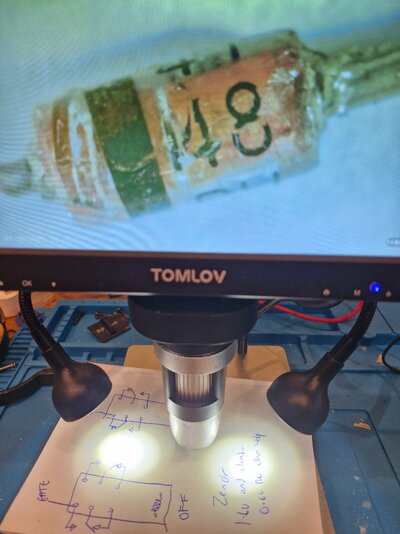
So I have ordered new replacements. I am getting readings both ways on the one in the board. I presume to test it id have to lift one leg and at that point I may as well renew it too as they cost pennies.
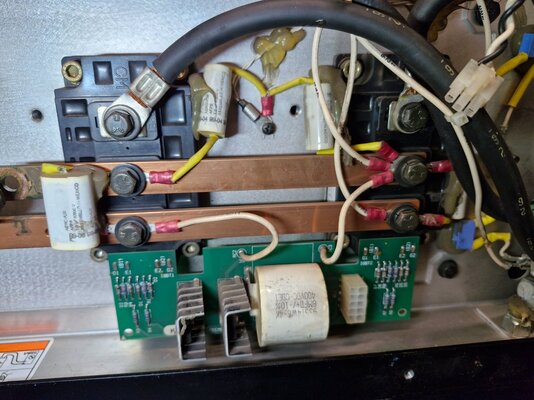
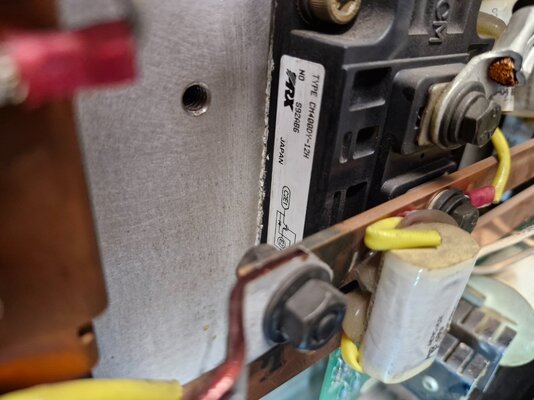
Now that we know the total DC bus voltage across both capacitors is 323v, which is close to the expected value, I think we should step back a moment and confirm that the precharge bypass thyristor has not, or has, been triggered. If it is not conducting, the bus voltage is being reduced by the voltage drop across the 200 Ohm precharge resistor. When not welding, we don't know how much current the idle inverter is pulling, but if it is, for example, 0.1 A, then from V=IR, there should be 20 volts across that 200 Ohm resistor, and if it was shorted by the thyristor, that would drop to nearly zero and the bus voltage across C3 and C4 would rise to 343 volts.
Could you please check the voltage across the precharge resistor, as in your Post #40, but measuring DC volts and with the machine powered up? The voltage should jump to a high value with the initial current surge into the empty capacitors, then drop exponentially, then - hopefully - fall to zero when ( if ) the thyristor shorts it. An old-fashioned analogue voltmeter would probably show this better than a digital meter.
Please see the readings in this video
Those are DC volt readings between the terminals as picture in post #40. C3+ and R2+.
I think the Thyristor could have got damaged too by my reverse polariting the relay. So I think my next steps are renew the Thyristor and both zenor diodes. I will test the old ones when off the board to know the results. Then power up again and see if any behaviour changes. Ideally the relay will be able to pull in fully. By then the scope should arrive too so I can return to test the gate signal properly.
(I sort of sound like I know what I'm talking about here. Rest assured I have no idea!! Eddie your input is fantastic, thank you!)