



You are using an out of date browser. It may not display this or other websites correctly.
You should upgrade or use an alternative browser.
You should upgrade or use an alternative browser.
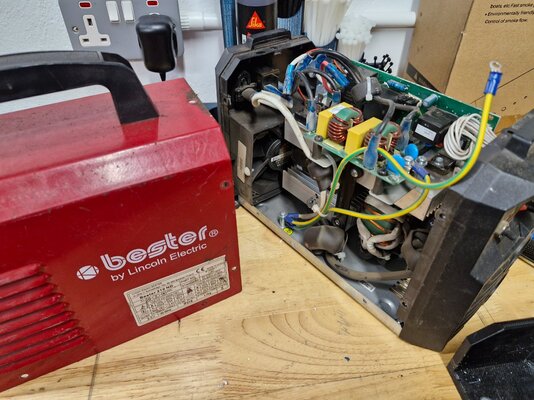
Lincoln Bester 210ND arc welder nor working
- Thread starter JOEPRO
- Start date

JOEPRO
Member
- Messages
- 5,491
- Location
- UK
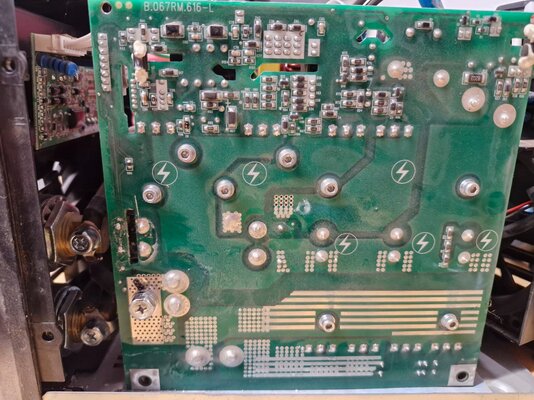
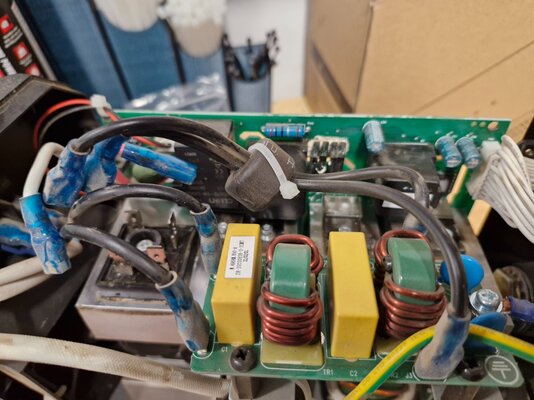
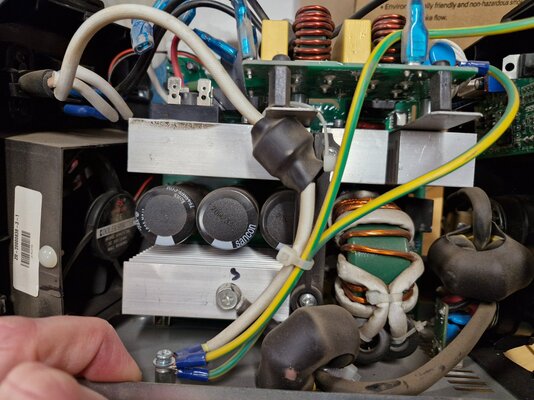
I got a better look at this Lincoln today. I discovered no AC at the main board. The 4 pin diode bridge rectifier was bad.
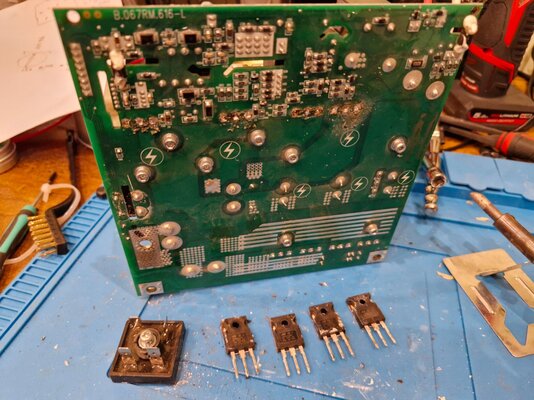
I wanted to check why so I checked the IGBTs which are a common failure on modern inverter welders. Sure enough 3x of them on one row tested bad. There are 8 total, I removed the top row of 4x and I will replace that row. The bottom row all tested good so ill leave them alone. I tested the small components connecting the blown IGBTs and they appeared OK too, not open circuit.
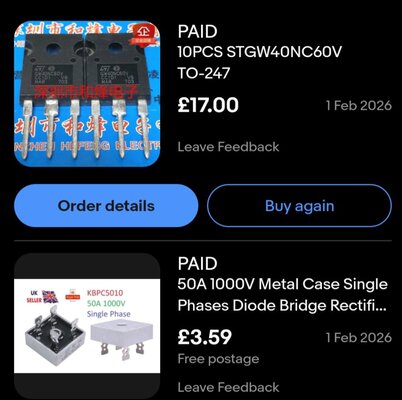
Parts ordered, cheap enough too. 10 so ill have some spare.
I wanted to check why so I checked the IGBTs which are a common failure on modern inverter welders. Sure enough 3x of them on one row tested bad. There are 8 total, I removed the top row of 4x and I will replace that row. The bottom row all tested good so ill leave them alone. I tested the small components connecting the blown IGBTs and they appeared OK too, not open circuit.
Parts ordered, cheap enough too. 10 so ill have some spare.
Good progress so far!
See the warning in Post #4 here:
A good opportunity to check the gate switching pulses with your new 'scope! See how to do this safely in Post #21 here:
See the warning in Post #4 here:
When IGBTs go short-circuit, they often conduct high voltages from the collector/emitter circuits through to the gate. This destroys the gate driver circuitry. You need to trace the circuit path from the gate of the IGBT module back to the control logic, and check it. There may be Zener diodes, resistors, a dedicated driver chip or a pulse transformer involved.
Another problem can be that installing a new IGBT with the gate driver still damaged can self-charge the capacitance of a floating gate. The IGBT will then conduct fully on, and blow itself up again. Therefore you would need to...
Another problem can be that installing a new IGBT with the gate driver still damaged can self-charge the capacitance of a floating gate. The IGBT will then conduct fully on, and blow itself up again. Therefore you would need to...
Another thread about Parweld inverter welder repairs that might be helpful:
In post #24 it mentions a suggestion taken from a Selco welder repair manual that recommends using a low-voltage current-limited DC supply from a bench power supply instead of the 325v DC rectified from the AC mains. This would be done after replacing valuable IGBTs to confirm that the gate drive circuits are working correctly. The outputs from the bridge rectifier(s) are disconnected from the inverter power switching...
WWS200, Parweld XTS162 welder repairs
Hi Chaps, I recently bought a known faulty WWS200 MMA/lift rig welder. It doesn’t look as if it has even struck an arc as it is immaculate condition. The issue is that when plugged in the welder is completely dead. I only got it this afternoon so have only had chance to take a quick look...
www.mig-welding.co.uk

JOEPRO
Member
- Messages
- 5,491
- Location
- UK
Big progress since. I made one of these boxes to limit the current for safe startup-
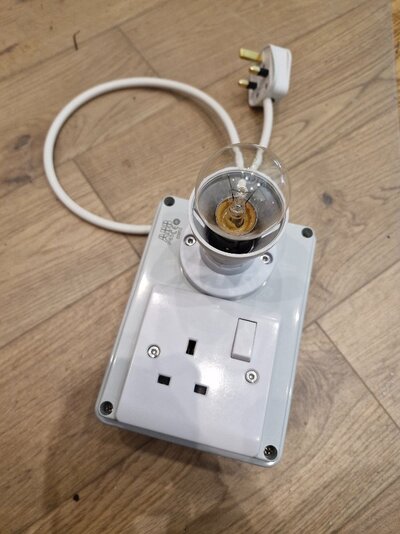
(Bulb wired in series) The bulb limits the current to prevent damage. With the shorted IGBTs removed and new bridge retifier it now starts up. But as I have a 60w bulb it keeps cycling on and off as its being starved of current too much. 200w bulb ordered next.
But there is life in the welder for the first time which is great.
When the 200w bulb arrives I should be able to power it continuously and test the gate signals are present before soldering in new IGBTs.
(Bulb wired in series) The bulb limits the current to prevent damage. With the shorted IGBTs removed and new bridge retifier it now starts up. But as I have a 60w bulb it keeps cycling on and off as its being starved of current too much. 200w bulb ordered next.
But there is life in the welder for the first time which is great.
When the 200w bulb arrives I should be able to power it continuously and test the gate signals are present before soldering in new IGBTs.
JOEPRO
Member
- Messages
- 5,491
- Location
- UK
Update. The 200w bulb arrived yesterday. So I powered up the welder again. This time it ran and the bulb low glow at first -
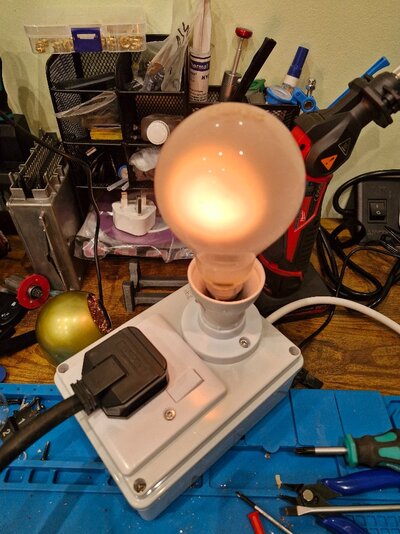
At first OK, then about 20 secs in the bulb started to go bright and cut the voltage to the welder that it "browned out" . I could see a little puff of smoke from the welder board. Oh dear.
I got my thermal imaging camera and the item Q16 below was hot
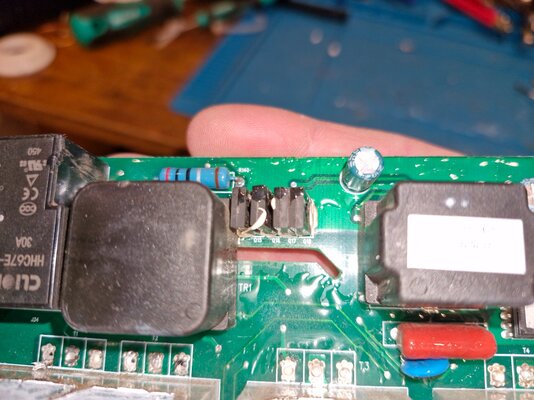
These 4x items are 2 pairs. As follows:
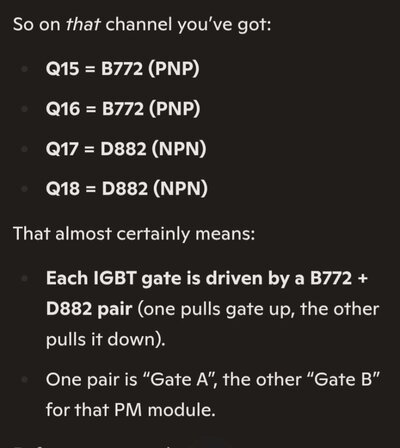
I have a cheap kit ordered with those in it. One or two tested bad but I will replace the set of 4x. Then power up again no IGBTs and see if that issue is cleared up. Before measuring gate signals.
At first OK, then about 20 secs in the bulb started to go bright and cut the voltage to the welder that it "browned out" . I could see a little puff of smoke from the welder board. Oh dear.
I got my thermal imaging camera and the item Q16 below was hot
These 4x items are 2 pairs. As follows:
I have a cheap kit ordered with those in it. One or two tested bad but I will replace the set of 4x. Then power up again no IGBTs and see if that issue is cleared up. Before measuring gate signals.