



You are using an out of date browser. It may not display this or other websites correctly.
You should upgrade or use an alternative browser.
You should upgrade or use an alternative browser.
Chinese Diesel heater for the workshop
- Thread starter Cheesie
- Start date

winchman
Member
- Messages
- 6,359
- Location
- Merseyside
I once managed to buy one for £65! on Ebay, didn't expect it to arrive, 3 days later it was here world fine just the same as the ones I have paid over £100 for. Make sure the exhaust silencer and air filter come with it as they make a difference to the noise. Very informative Facebook group " Chinese Diesel Heaters" great source of info.


gaz1
Member
- Messages
- 20,775
- Location
- westyorkshire
2kw and 4kw for the diesel heaters so dont buy any that claim to be more 5kw can be bought as it should be the 4kw product
theres a heater thread allready including clean outs for these models
try not to run them at tick over best to run them at full bore
theres a heater thread allready including clean outs for these models
try not to run them at tick over best to run them at full bore
Jelly_Sheffield
Time is an illusion. Lunchtime doubly so.
- Messages
- 1,461
- Location
- Sheffield, UK
There are basically two forms they come in. The complete-as-a-unit ones should not be installed inside a habitable building. Only the kits, where the exhaust is entirely isolated from the occupied side, are deemed as safe.
Also to meet the building regs:
- The exhaust pipe should be surrounded by at least 50mm of "non combustible material" when it passes through a wall (I used a metal duct packed with rockwool and sealed with fire cement... Solid Concrete/Brick is obviously fine as is, but not necessarily if lined/insulated).
- The combustion air inlet should be positioned at the same approximate height and aspect as the exhaust to provide a "balanced flue".
- The internal fuel lines should be metallic (I used microbore copper pipe, which is straightforward, and compression fittings will connect to the hose-barbs on the heater and pump effectively, if you take the bulge off with a hacksaw).
- There should be a quick disconnect or thermal cut-off valve in the fuel line in case of fire.
I run 2 heaters in my wooden 10x16 shed both are run at tick over and only occasionally run at full speed for 5 minuets
just incase there is a build up of soot. The suplied remotes work,1 of them only has a range of about 15' the other has
a range of about 200+feet, both clam to have an output of 8KW but as ''not done it yet '' says below what is clamed.
There is a guy on you tube that a very good knowledge of these heaters ''David McLuckie'' channel
Well worth a look at..
just incase there is a build up of soot. The suplied remotes work,1 of them only has a range of about 15' the other has
a range of about 200+feet, both clam to have an output of 8KW but as ''not done it yet '' says below what is clamed.
There is a guy on you tube that a very good knowledge of these heaters ''David McLuckie'' channel
Well worth a look at..
Bobtail4x4
Forum Supporter
- Messages
- 1,474
- Location
- Yorkshire
just got one today from TEMU, for £64, all in one model
I have a small 2kw one in the camper, it runs for about 4 mins and then its up to temp, so goes to idle mode,
I have a small 2kw one in the camper, it runs for about 4 mins and then its up to temp, so goes to idle mode,
Jelly_Sheffield
Time is an illusion. Lunchtime doubly so.
- Messages
- 1,461
- Location
- Sheffield, UK
The other thing worth considering is adding ducting.
I used 80mm galv ducts to convey the warm air along the workshop and vent it through proportioning valves so the whole area gets an even heat output.
Total cost about £40, massive improvement of the functionality of my heater.
With that setup and decent insulation, a single 4kw heater can maintain a 15°C temperature difference to the outside for a 25m² (280sqft) workshop, sufficient for even the depths of winter as long as I'm actually working in there.
I used 80mm galv ducts to convey the warm air along the workshop and vent it through proportioning valves so the whole area gets an even heat output.
Total cost about £40, massive improvement of the functionality of my heater.
With that setup and decent insulation, a single 4kw heater can maintain a 15°C temperature difference to the outside for a 25m² (280sqft) workshop, sufficient for even the depths of winter as long as I'm actually working in there.
Chinese measurements V real world ones?AFAIK, they are all the same output, despite what they claim.
Jelly_Sheffield
Time is an illusion. Lunchtime doubly so.
- Messages
- 1,461
- Location
- Sheffield, UK
As a Chinese supplier told me:Chinese measurements V real world ones?
"We can measure just fine as a nation... It's just that we have particularly zealous marketing departments, who haven't quite understood how finely balanced 'stretching the truth' if you don't want everyone thinking you're idiots. As an ambitious global company being associated with that reputation is killing us."

JOEPRO
Member
- Messages
- 5,506
- Location
- UK
@JOEPRO has one fitted in his workshop.
Yes I think it was on the day you were here
 Its a calory brand self contained type piped out through the wall. Great job maybe struggles slightly heating a masonry double garage with no insulation. Hence I have a second one to install now to boost it on really cold winter days.
Jelly_Sheffield
Time is an illusion. Lunchtime doubly so.
- Messages
- 1,461
- Location
- Sheffield, UK
Great job maybe struggles slightly heating a masonry double garage with no insulation.
I insulated my garage for soundproofing and rust reduction reasons as one of the first projects when I bought the house...
For a very modest outlay in materials, I have saved a huge amount in heating costs.
Would absolutely recommend.
Although ultimately a dehumidifier on a humidistat was a much cheaper way to fight rust...
gaz1
Member
- Messages
- 20,775
- Location
- westyorkshire
burdekins is half wall half fully insulated fut the roof is well insulatedYes I think it was on the day you were here
another post then theres fizzys diesel heaters
Small Diesel Shop Heater
I would like to occasionally warm my garage. Does anyone have experience with one of these. They are only about a hundred dollars and seem to be safe to use.
www.mig-welding.co.uk

skotl
Forum Supporter
- Messages
- 10,565
- Location
- Edinburgh, UK
Couple of extensive threads over here:
The vid in the second link (disclaimer: by me) does delve into the differences between the smaller and larger units on the market.
Recommend me a workshop heater
It’s official, freezing my nads off weather has arrived. Even with 3 layers on it’s too cold to be out there. Frost on the cars tonight. Looking at one of those diesel/paraffin rocket style heaters but sort of keen to avoid the cheap ones that can’t be fixed if they go wrong. That kind of rules...
www.mig-welding.co.uk
Skotl's diesel heater garage install thread
Following the excitement generated over in this thread: https://www.mig-welding.co.uk/forum/threads/recommend-me-a-workshop-heater.117484/ I ordered myself not one but two diesel heaters. With apologies to @MattF who has a very thin skin when it comes to suggesting new things to spend his...
www.mig-welding.co.uk
The vid in the second link (disclaimer: by me) does delve into the differences between the smaller and larger units on the market.
Jelly_Sheffield
Time is an illusion. Lunchtime doubly so.
- Messages
- 1,461
- Location
- Sheffield, UK
Ditto, I got mine from a coatings lab that was closing down and it's comically oversized for the space really.I have both. My dehumidifier is a desiccant type. It uses more lecky than a compressor type, so adds enough heat to my very well insulated workshop, to avoid condensation, most of the time.
I set the humidistat to kick in when the temperature is lower than 13°C and RH reaches 80%, or the temperature is greater than 13°C and RH reaches 90%, in both cases switching off when RH is down to 50%.It is cheaper to run the dehumidifier on a cheap tariff than use oil. A couple hours per night (about 3/4 of a kWh) is sufficient to reduce the humidity and raise the temperature sufficiently to avoid rusting.
When I did a series of comparative tests, the fact that the desiccant type dehumidifier will continue to work as effectively regardless of air temperature made it more cost effective than trace heating alone, or trace heat and a compressor dehumidifier, over the course of a year.
Incredibly effective compared to every other "rust prevention" technique I've tried before, and I won't go back, I don't think I've had condensation in the workshop at all since I set it up like that on automatic cycle.
Only downside is that the dry air output is very dry, you can actively feel the moisture leaving your skin if you're stood under one of the vents when it kicks on.
That costs around 45p/week at the present time. I only heat for a short time with the diesel heater before and after I enter to work in there. After that the heater is turned to minimum or turned off - but I’m not in there all day long!
Similar, in practice the heater is only really useful when the air temperature is single digits or lower.
Being able to comfortably work in the workshop when it's been -5°C outside is quite a smug feeling though.
At home I do most of my work in a brick double garage and for rarely longer than 3 or 4 hours at a time, come the colder weather I struggle with my hands so as it gets colder the less I can do or the shorter time I can work, I've previously tried a propane blow heater which was ok'ish as I could move it to where ever I was working and at least keep one side of me warm but stopped using it because of the condensation it caused. I've considered getting a chinese diesel heater and imagine it would given time warm the air enough to make things more bearable but my main concern is will it cause condensation? I know it only recirculates the air and doesn't add the products of combution as propane heaters do but will the moisture in the warm air still end up condencing on any pieces of cold metal?
gaz1
Member
- Messages
- 20,775
- Location
- westyorkshire
brick shed roof metal and it dripped for fun, only cure insulate it so the warm air dosnt hit that cold roof
a metal shed will want insulating even if you put 1" insulation around the the outside before the roof sheets go on its still insulated enough the only issue is the gaps need filling to stop any heat hitting that cold roof or it will run down and find a way through
propane heaters add water to the air a wood stove dosnt and neither does the diesel heater as its only warming up the air within the building
even 3 4 hr candles will warm a room up but best to take air from the outside and exit to the outside so your only heating up the air within
a metal shed will want insulating even if you put 1" insulation around the the outside before the roof sheets go on its still insulated enough the only issue is the gaps need filling to stop any heat hitting that cold roof or it will run down and find a way through
propane heaters add water to the air a wood stove dosnt and neither does the diesel heater as its only warming up the air within the building
even 3 4 hr candles will warm a room up but best to take air from the outside and exit to the outside so your only heating up the air within

pawsnizzy
Forum Supporter
- Messages
- 908
- Location
- Derbyshire, UK
I've just bought one of these, I was having a firtle last night (with the heater!) and wasn't impressed with the way that the exhaust is supposed to attach without leaking. Would it be best to use exhaust goo and a BFO clip (jubilee or other), or is there a better way?
Cheers
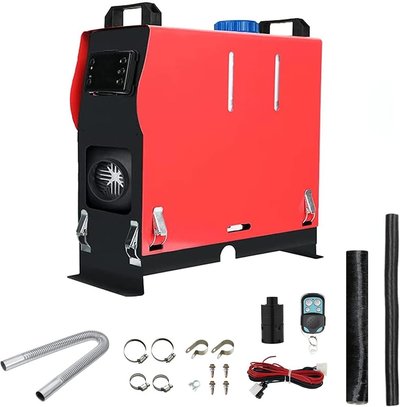
Cheers
I've got a very old but good Webasto Airtop 2kw in my camper, but have considered one like that for my shed.I've just bought one of these, I was having a firtle last night (with the heater!) and wasn't impressed with the way that the exhaust is supposed to attach without leaking. Would it be best to use exhaust goo and a BFO clip (jubilee or other), or is there a better way?
Cheers
View attachment 468312
What's your opinion if it overall for what it cost?
(I'd prefer a simple one with a twiddle knob controller like my old Webasto, but it seems they all come with an electronic whizzkid controller and a Remote - but that's how it is)