



You are using an out of date browser. It may not display this or other websites correctly.
You should upgrade or use an alternative browser.
You should upgrade or use an alternative browser.
JLR Workshop fun
- Thread starter Ubique
- Start date


Ubique
Member
- Messages
- 2,675
- Location
- East Midlands
Given the choice between and Audi/Porche V6 EGR valve, M-B TDV6 port deactivation motor or a TDV8 oil cooler, I'd take the oil cooler every time!
The pipework looks a bit messy because a lot of it is disconnected & moved out of the way - I've got another one to do soon so I'll take a photo with the charge air manifold out of the way but before anything else is moved - it's not that busy in there.
The pipework looks a bit messy because a lot of it is disconnected & moved out of the way - I've got another one to do soon so I'll take a photo with the charge air manifold out of the way but before anything else is moved - it's not that busy in there.

Bobupndown
What could possibly go wrong?
- Messages
- 2,109
- Location
- Northern Ireland
My trusty Freelander 2 has decided it wants to have some mechanical attention, thoughts please from the experts.
It has developed a growling noise from the front which sounds for all the world like a wheel bearing failing. I know it can be notoriously difficult to diagnose which bearing is causing the problem. No play detectable with wheels jacked up and no obvious noise at the hubs while turning either wheel. It just passed mot 2 weeks ago with no issues reported. There is a very slight noise from the area of the front ptu as I turn the drivers side wheel / drive shaft but im not sure if its just a normal mechanical components rotating noise or it it's indication of the problem being there.
My next idea is to remove the drive shafts from the hubs, to be able to spin the hubs on their own without any other transferred noise from the driveshafts / ptu / gearbox which might prove if either one is causing the issue.
Failing that I suppose im looking at replacing the PTU (and splined coupler).
Any other tips, tricks or advice in diagnosing this issue?
It has developed a growling noise from the front which sounds for all the world like a wheel bearing failing. I know it can be notoriously difficult to diagnose which bearing is causing the problem. No play detectable with wheels jacked up and no obvious noise at the hubs while turning either wheel. It just passed mot 2 weeks ago with no issues reported. There is a very slight noise from the area of the front ptu as I turn the drivers side wheel / drive shaft but im not sure if its just a normal mechanical components rotating noise or it it's indication of the problem being there.
My next idea is to remove the drive shafts from the hubs, to be able to spin the hubs on their own without any other transferred noise from the driveshafts / ptu / gearbox which might prove if either one is causing the issue.
Failing that I suppose im looking at replacing the PTU (and splined coupler).
Any other tips, tricks or advice in diagnosing this issue?
Ubique
Member
- Messages
- 2,675
- Location
- East Midlands
Ideally, get it up on a lift so you can spin it up in gear - it's very difficult to isolate by hand unless it's really 'advanced'...
The other way is to get a set of chassis ears - a basic wired set appears to be ~£50, think of it as money you won't waste on other stuff....
If you suspect the PTU, then it may be worth draining some oil to check for 'sparkles' although they rarely fail, the splined couplers do bind, grind and wear however, we've had to weld a plate onto them many times so we can attach a slide hammer to extract it.
The other way is to get a set of chassis ears - a basic wired set appears to be ~£50, think of it as money you won't waste on other stuff....
If you suspect the PTU, then it may be worth draining some oil to check for 'sparkles' although they rarely fail, the splined couplers do bind, grind and wear however, we've had to weld a plate onto them many times so we can attach a slide hammer to extract it.
Guineafowl
Member
- Messages
- 1,552
- Location
- Nairn
Before I had a lift, I put up my old FL1 on four axle stands and crawled under while it was running in gear. You’ve got to be a bit careful, of course, but a long screwdriver works well as a stethoscope. In this case, it was the front prop support bearing, and I could also feel the vibrations from it, just like you can feel the vibrations from a bad wheel bearing if you grab hold of the suspension spring while spinning the wheel.My trusty Freelander 2 has decided it wants to have some mechanical attention, thoughts please from the experts.
It has developed a growling noise from the front which sounds for all the world like a wheel bearing failing. I know it can be notoriously difficult to diagnose which bearing is causing the problem. No play detectable with wheels jacked up and no obvious noise at the hubs while turning either wheel. It just passed mot 2 weeks ago with no issues reported. There is a very slight noise from the area of the front ptu as I turn the drivers side wheel / drive shaft but im not sure if its just a normal mechanical components rotating noise or it it's indication of the problem being there.
My next idea is to remove the drive shafts from the hubs, to be able to spin the hubs on their own without any other transferred noise from the driveshafts / ptu / gearbox which might prove if either one is causing the issue.
Failing that I suppose im looking at replacing the PTU (and splined coupler).
Any other tips, tricks or advice in diagnosing this issue?
Ubique
Member
- Messages
- 2,675
- Location
- East Midlands
Further info on the FL2, check the intermediate bearing on the OSF driveshaft - known to get 'notchy', they can be replaced separately.
Coincidentally, one of the staff FL2's has a grumbly PTU that's being exchanged tomorrow, the pinion bearing is the culprit and can be checked with chassis ears or checking for lift/oil leak on the pinion.
If you take the PTU out, replace the splined coupler and grease - NOT with copperslip!, use a Moly-based grease, i.e. CV joint grease.
Coupling sleeve & it's box
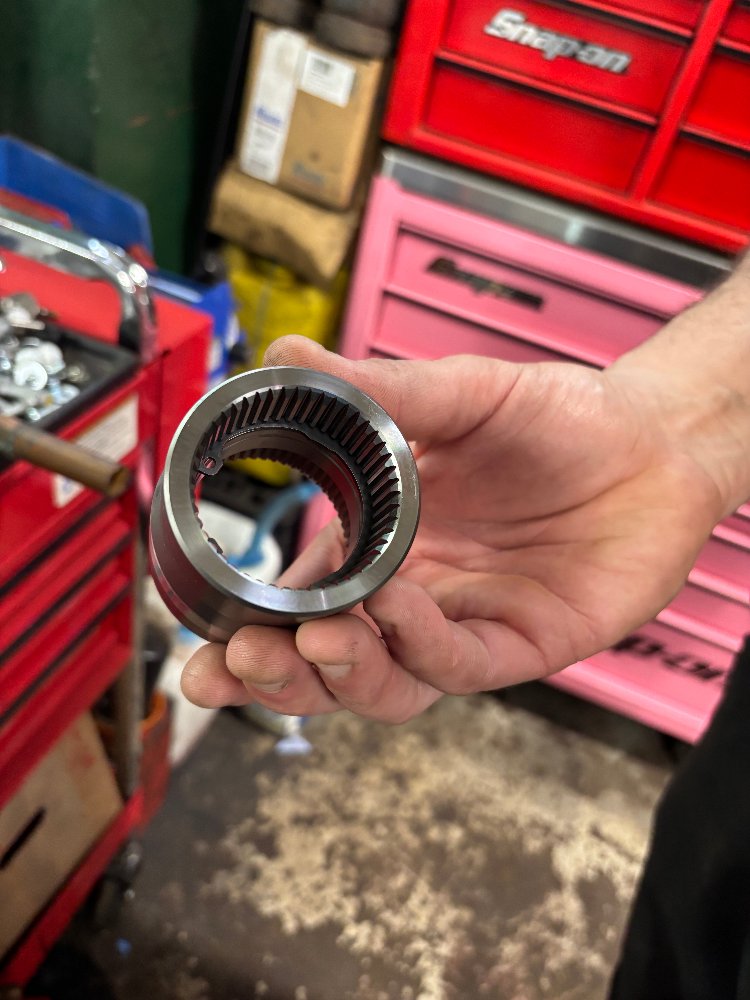
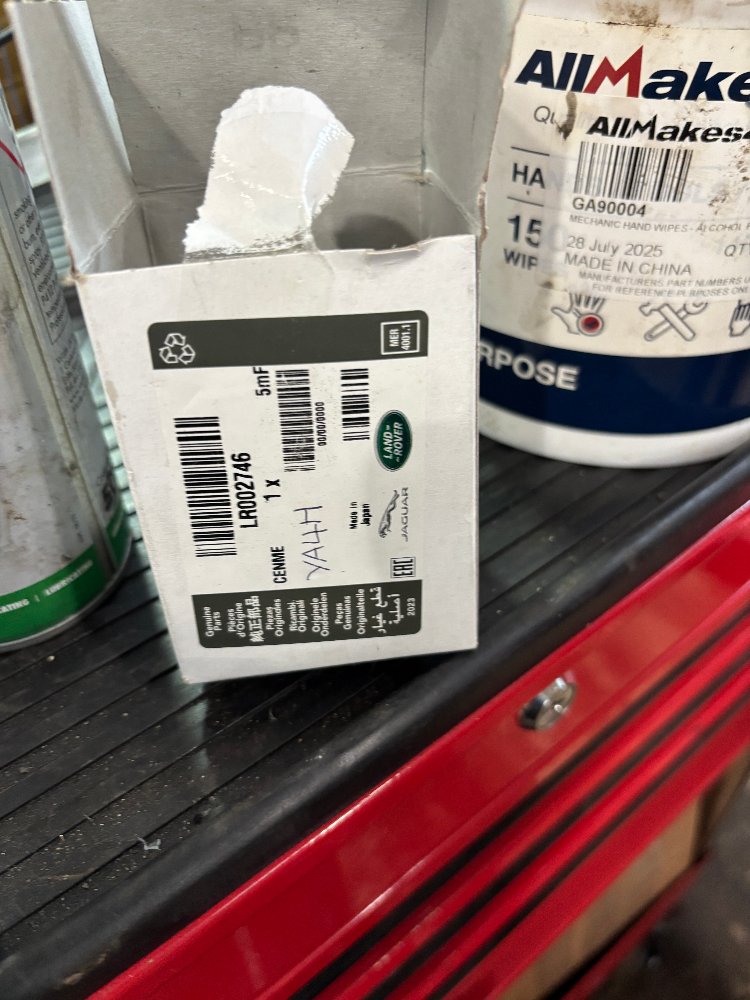
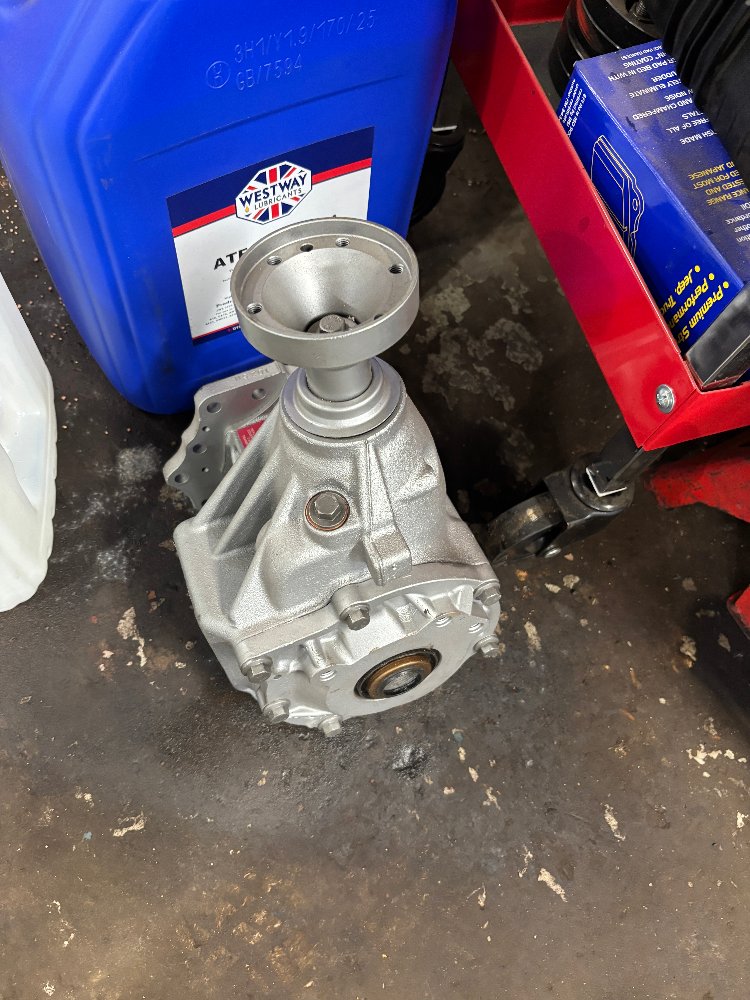
Replacement PTU - don't forget to fill with oil!
Coincidentally, one of the staff FL2's has a grumbly PTU that's being exchanged tomorrow, the pinion bearing is the culprit and can be checked with chassis ears or checking for lift/oil leak on the pinion.
If you take the PTU out, replace the splined coupler and grease - NOT with copperslip!, use a Moly-based grease, i.e. CV joint grease.
Coupling sleeve & it's box
Replacement PTU - don't forget to fill with oil!
Ubique
Member
- Messages
- 2,675
- Location
- East Midlands
Two interesting jobs today:-
L405 liftgate dropping when opened.
L405 suspension knock / tap from rear.
The liftgate had previously been checked and replacement electrically operated lift rams ordered.
Upon testing, the concern was still evident, even after a forced calibration...
I noticed the liftgate had dropped on one side more than the other so I got the tech who's job it was to carry out adjustment (these liftgates are made from two fibreglass shells bonded together and do drop/change shape at the top over time....). After adjustment and another calibration, it worked fine. My thinking was that each motor was doing an unequal number of turns so the controller was adjusting for this at the top of the movement - seems to have been along the right lines!.
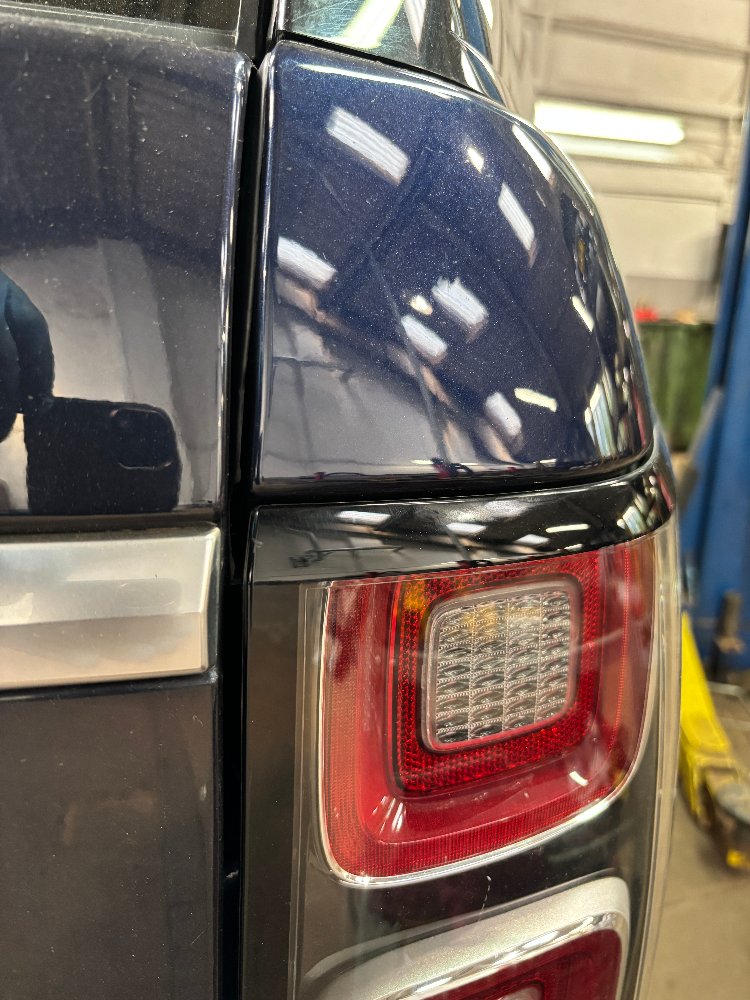
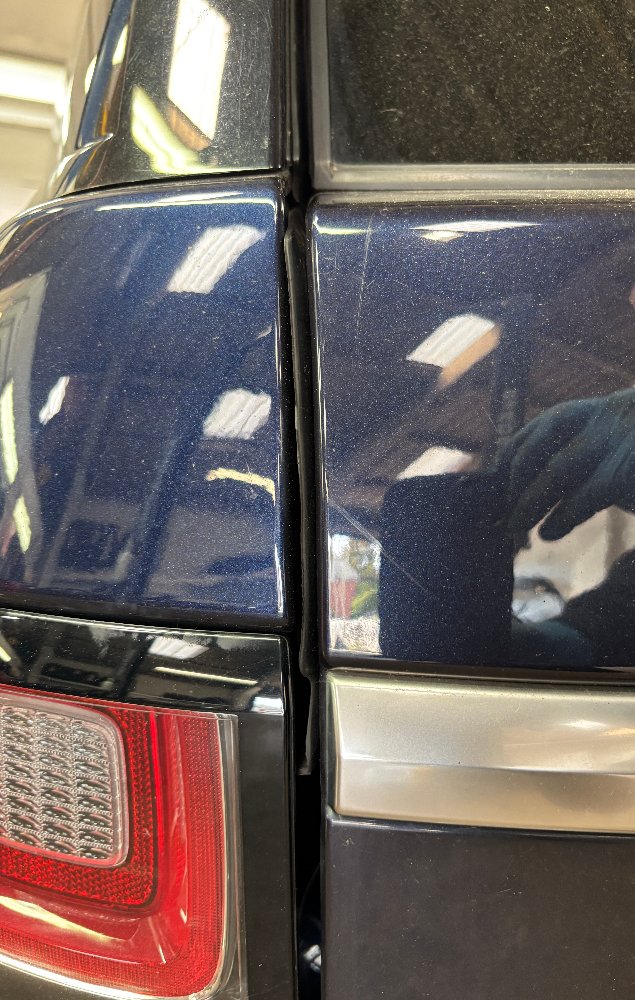
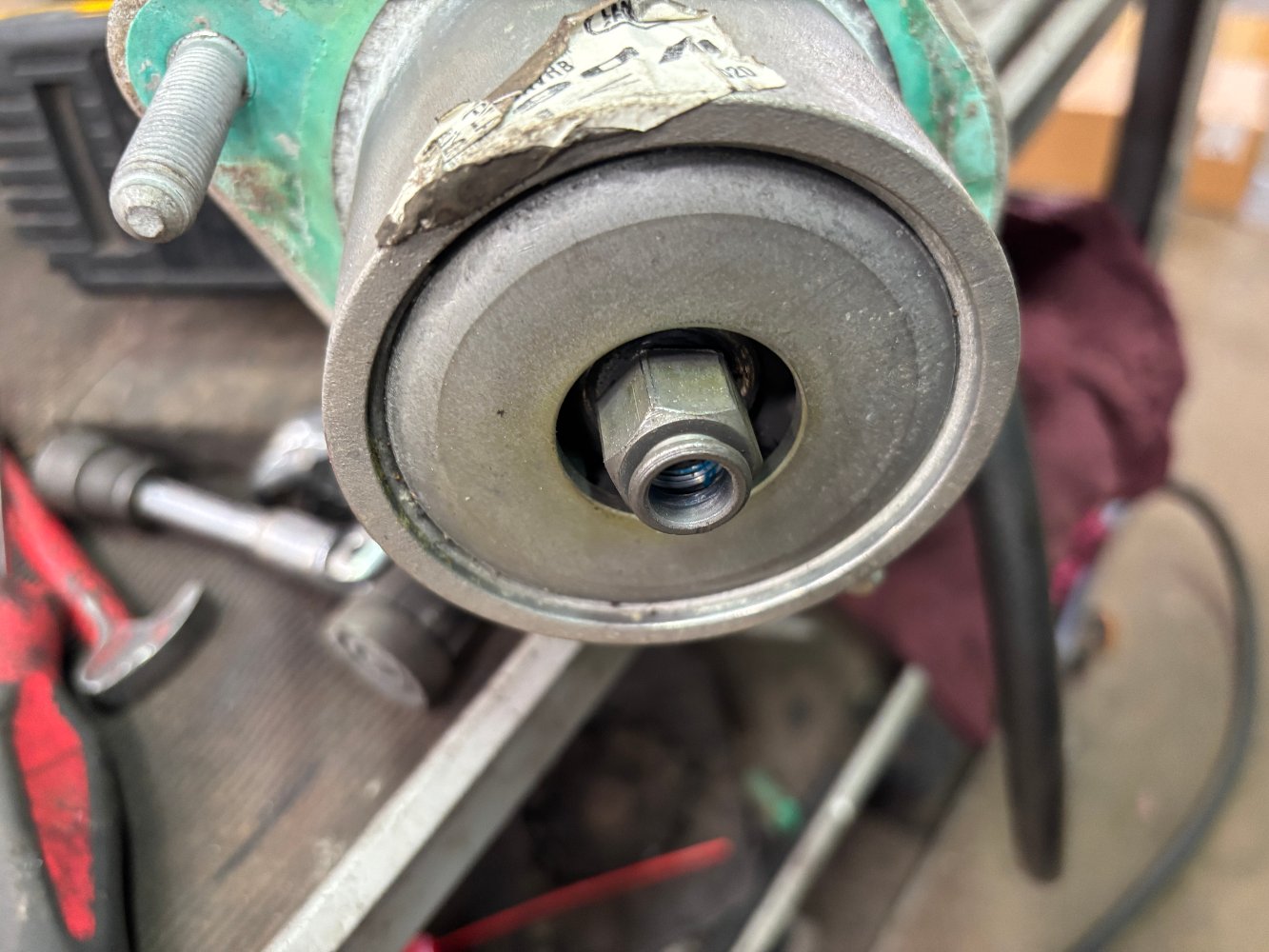
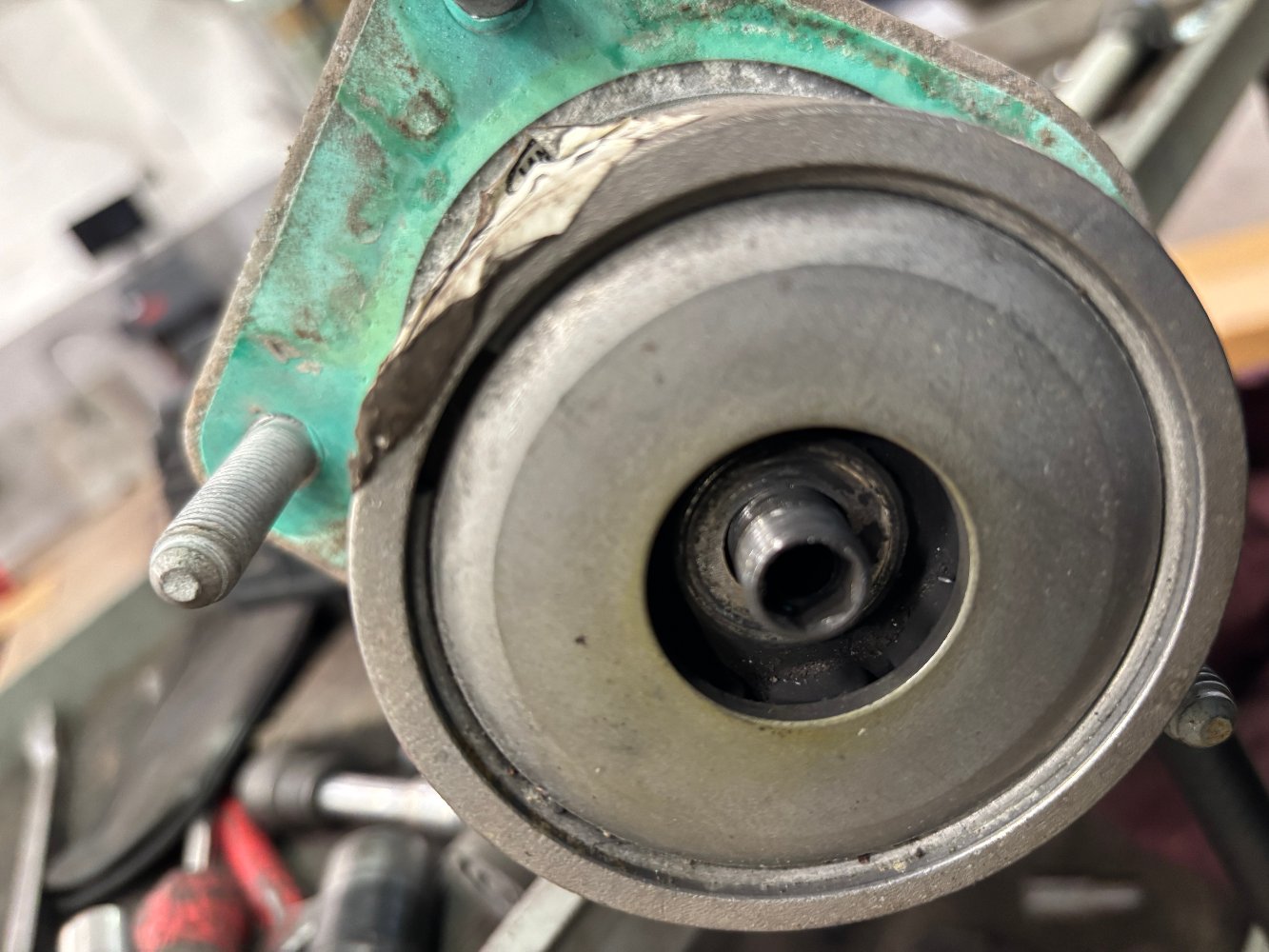
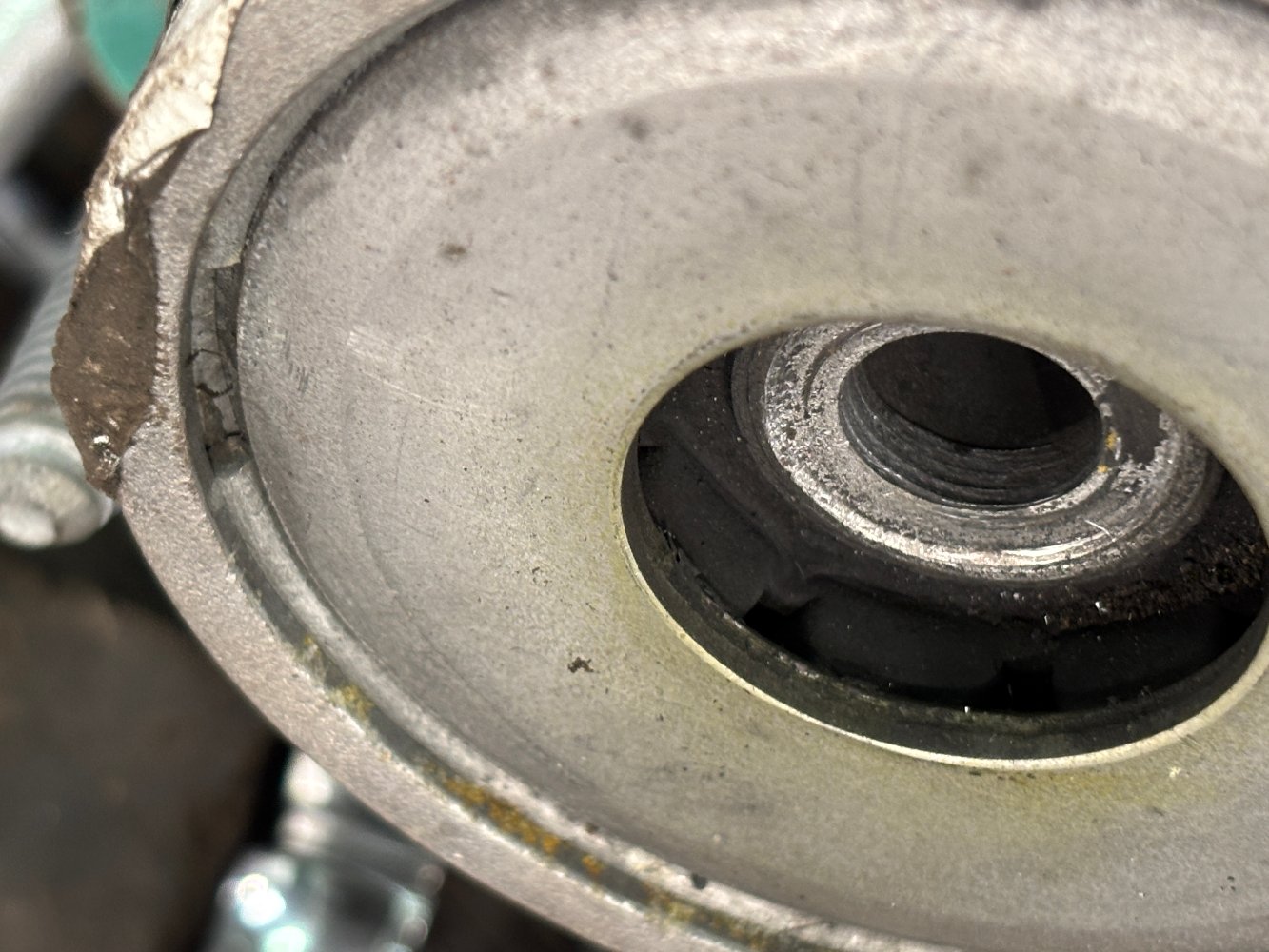
Next one, a slight knock - actually more of a mechanical tap from the OSR of a 2014 L405 with 170k miles. Easily reproducible, in fact you could cause it by jumping on & off the tailgate. Visual check of suspension showed all the bushes & linkages OK (these tend to give a dull thump. not a 'tap') so it was suspected the suspension damper or top mount was the cause.
Removing confirmed the top mount had worn, the nut was loose (but threadlocked) you can see how the continual load and unloading has peened the bearing surface of the mount. It was tempting to just nip it up, but better to replace the top mount - a complete active damper assembly is £560+vat! Top mount only is £93+vat.
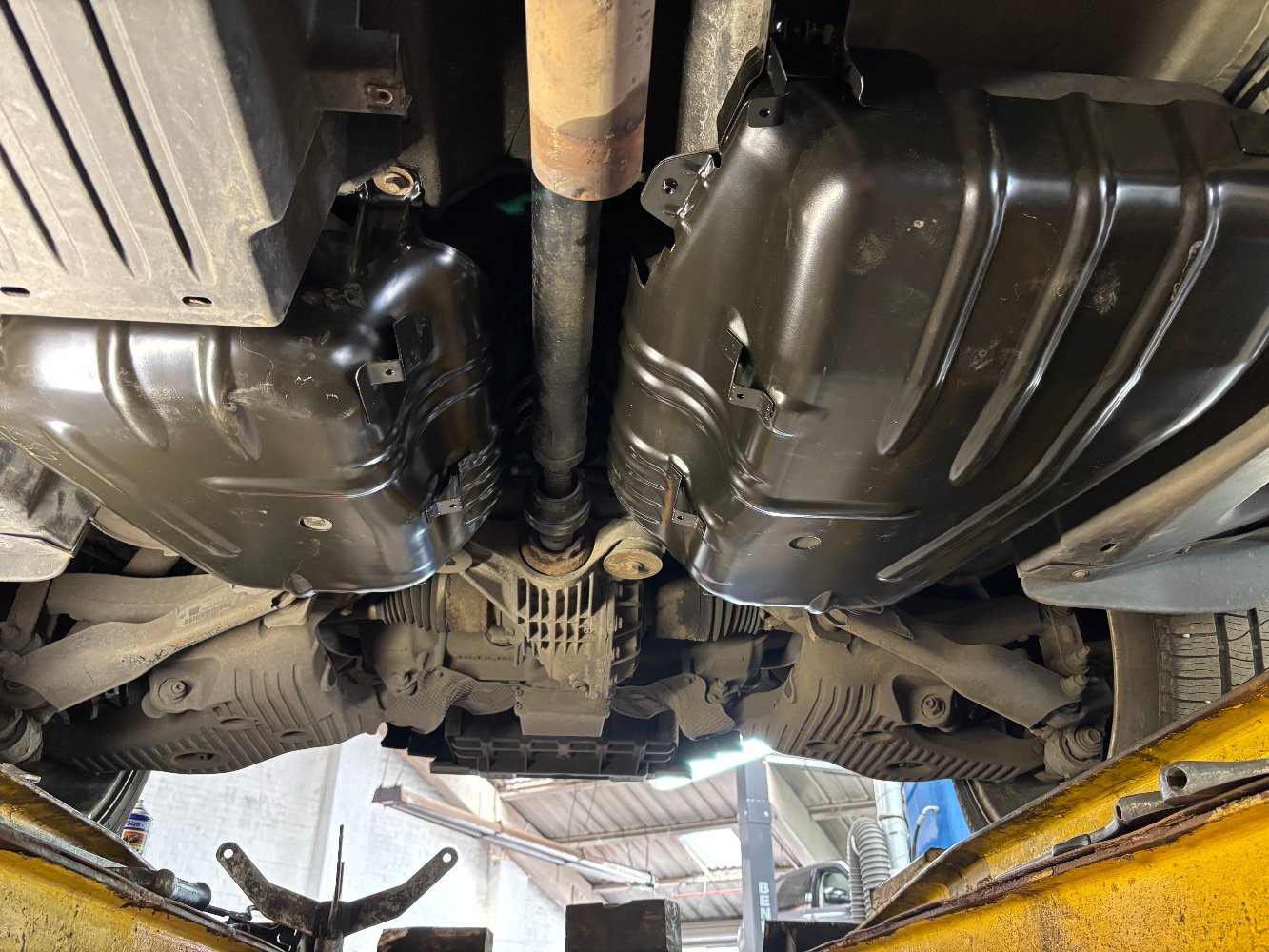
Lastly, a couple of photos of a L494 fuel tank cradle - similar to the one in the thread I started regarding protective coatings
Safe to say they'd had the best out of this one!
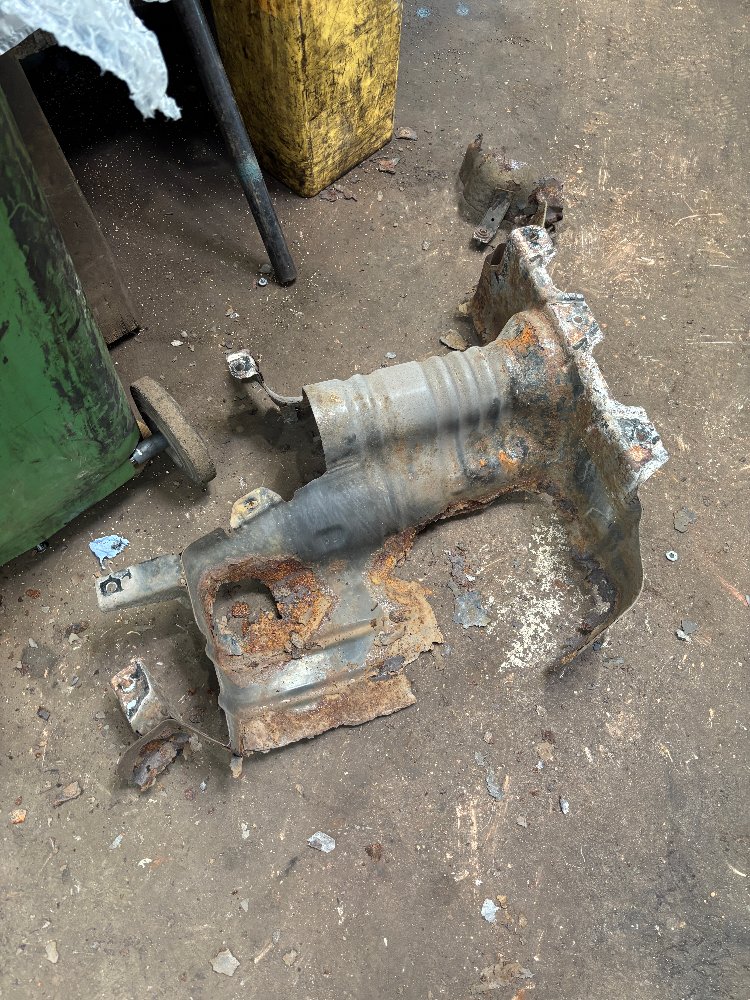
No cutting was done, that's pretty much how it came off.
New one in situ.
L405 liftgate dropping when opened.
L405 suspension knock / tap from rear.
The liftgate had previously been checked and replacement electrically operated lift rams ordered.
Upon testing, the concern was still evident, even after a forced calibration...
I noticed the liftgate had dropped on one side more than the other so I got the tech who's job it was to carry out adjustment (these liftgates are made from two fibreglass shells bonded together and do drop/change shape at the top over time....). After adjustment and another calibration, it worked fine. My thinking was that each motor was doing an unequal number of turns so the controller was adjusting for this at the top of the movement - seems to have been along the right lines!.
Next one, a slight knock - actually more of a mechanical tap from the OSR of a 2014 L405 with 170k miles. Easily reproducible, in fact you could cause it by jumping on & off the tailgate. Visual check of suspension showed all the bushes & linkages OK (these tend to give a dull thump. not a 'tap') so it was suspected the suspension damper or top mount was the cause.
Removing confirmed the top mount had worn, the nut was loose (but threadlocked) you can see how the continual load and unloading has peened the bearing surface of the mount. It was tempting to just nip it up, but better to replace the top mount - a complete active damper assembly is £560+vat! Top mount only is £93+vat.
Lastly, a couple of photos of a L494 fuel tank cradle - similar to the one in the thread I started regarding protective coatings
Safe to say they'd had the best out of this one!
No cutting was done, that's pretty much how it came off.
New one in situ.
I had a grumbling PTU, first thought it was tyre noise, then wheel bearing, nothing found. Then I checked the input shaft of the PTU and there was loads of free play. Very obvious. I've got a video somewhere...Further info on the FL2, check the intermediate bearing on the OSF driveshaft - known to get 'notchy', they can be replaced separately.
Coincidentally, one of the staff FL2's has a grumbly PTU that's being exchanged tomorrow, the pinion bearing is the culprit and can be checked with chassis ears or checking for lift/oil leak on the pinion.
If you take the PTU out, replace the splined coupler and grease - NOT with copperslip!, use a Moly-based grease, i.e. CV joint grease.
Coupling sleeve & it's box
View attachment 539712View attachment 539713
Replacement PTU - don't forget to fill with oil!
View attachment 539711
I got it changed by Bell Engineering in the end.
Bobupndown
What could possibly go wrong?
- Messages
- 2,109
- Location
- Northern Ireland
I'm veering towards this being the problem, noise has got significantly worse over last few days, think Spitfire on takeoff!Further info on the FL2, check the intermediate bearing on the OSF driveshaft - known to get 'notchy', they can be replaced separately.
Coincidentally, one of the staff FL2's has a grumbly PTU that's being exchanged tomorrow, the pinion bearing is the culprit and can be checked with chassis ears or checking for lift/oil leak on the pinion.
If you take the PTU out, replace the splined coupler and grease - NOT with copperslip!, use a Moly-based grease, i.e. CV joint grease.
Coupling sleeve & it's box
View attachment 539712View attachment 539713
Replacement PTU - don't forget to fill with oil!
View attachment 539711
Ill stick it up on axle stands and run it with all 4 wheels off the ground and have a look and listen.
I'm veering towards this being the problem, noise has got significantly worse over last few days, think Spitfire on takeoff!
Ill stick it up on axle stands and run it with all 4 wheels off the ground and have a look and listen.
On a fwd car there is a simple method to check a wheel bearing. Park with 1 front wheel on the grass verge. Put on the handbrake, select 1st and let out the clutch.
The wheel on the grass will spin unless you have off road tyres or a lsd fitted. Rock the steering from side to side to put some side loading on the bearing.
Repeat for the other wheel. An old school mechanic showed me this tip to narrow down which wheel bearing was noisy. I have used it a few times and it usually works.
Bobupndown
What could possibly go wrong?
- Messages
- 2,109
- Location
- Northern Ireland
Its a 4x4 on AT tyres, thats not gonna work. 
Bet he never tried that with an Alfasud, Alfa 33, Citroen BX...On a fwd car there is a simple method to check a wheel bearing. Park with 1 front wheel on the grass verge. Put on the handbrake, select 1st and let out the clutch.
The wheel on the grass will spin unless you have off road tyres or a lsd fitted. Rock the steering from side to side to put some side loading on the bearing.
Repeat for the other wheel. An old school mechanic showed me this tip to narrow down which wheel bearing was noisy. I have used it a few times and it usually works.
Ubique
Member
- Messages
- 2,675
- Location
- East Midlands
Ever heard of ABS? - do that on a car with it and it'll give you a result you didn't expect....On a fwd car there is a simple method to check a wheel bearing. Park with 1 front wheel on the grass verge. Put on the handbrake, select 1st and let out the clutch.
The wheel on the grass will spin unless you have off road tyres or a lsd fitted. Rock the steering from side to side to put some side loading on the bearing.
Repeat for the other wheel. An old school mechanic showed me this tip to narrow down which wheel bearing was noisy. I have used it a few times and it usually works.
I post a simple test for diagnosing a wheel bearing and you lot pick out the few cars that it won't work on.
I did say a fwd car and non off road tyres. And of course it won't work on a car with a handbrake on the front wheels.
Never had an issue on a car with standard abs. It might put on the abs light but that will go out again.
Maybe you meant a car with a smart abs/esc that sends traction to the other wheel?
I did say a fwd car and non off road tyres. And of course it won't work on a car with a handbrake on the front wheels.
Never had an issue on a car with standard abs. It might put on the abs light but that will go out again.
Maybe you meant a car with a smart abs/esc that sends traction to the other wheel?
Ubique
Member
- Messages
- 2,675
- Location
- East Midlands
Frankly it's not a good idea, if nothing else, I'd be surprised if you could hear anything above the sound of a tyre scuffing the ground, and let's hope it doesn't flick a stone up whilst you have your head out of the window or tear a neat circumferential groove in it from something sharp just below the surface...
Any ABS in those circumstances would reduce the power to the spinning wheel, traction control or not.
Any ABS in those circumstances would reduce the power to the spinning wheel, traction control or not.
Guineafowl
Member
- Messages
- 1,552
- Location
- Nairn
For wheel bearings, swerving left and right on a quiet stretch of road can help decide which bearing is noisy. The noise will increase when you’re swerving away from the bad side.Its a 4x4 on AT tyres, thats not gonna work.
Frankly it's not a good idea, if nothing else, I'd be surprised if you could hear anything above the sound of a tyre scuffing the ground, and let's hope it doesn't flick a stone up whilst you have your head out of the window or tear a neat circumferential groove in it from something sharp just below the surface...
Any ABS in those circumstances would reduce the power to the spinning wheel, traction control or not.
Basic abs will only stop the wheels locking under heavy braking. My van is 2014 and that's all it does.
I know more modern systems apply the brakes to a spinning wheel.
Ubique
Member
- Messages
- 2,675
- Location
- East Midlands
Well all the basic ABS systems on the basic 2WD cars I've ever had up on a two-poster with someone inside 'driving' it - and the ABS braking the wheels / cutting the power must've had an undiagnosed fault then.Basic abs will only stop the wheels locking under heavy braking. My van is 2014 and that's all it does.
I know more modern systems apply the brakes to a spinning wheel.
Or your van is unique.
It's French, of course it's unique!Well all the basic ABS systems on the basic 2WD cars I've ever had up on a two-poster with someone inside 'driving' it - and the ABS braking the wheels / cutting the power must've had an undiagnosed fault then.
Or your van is unique.