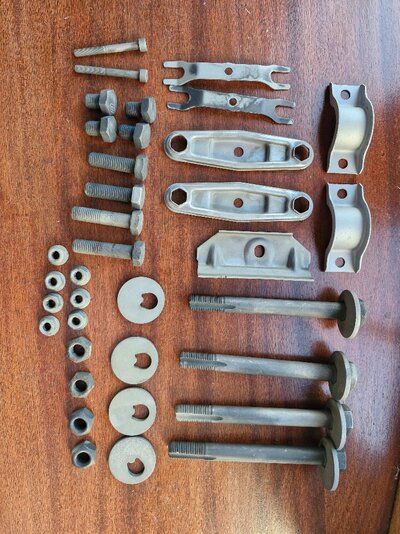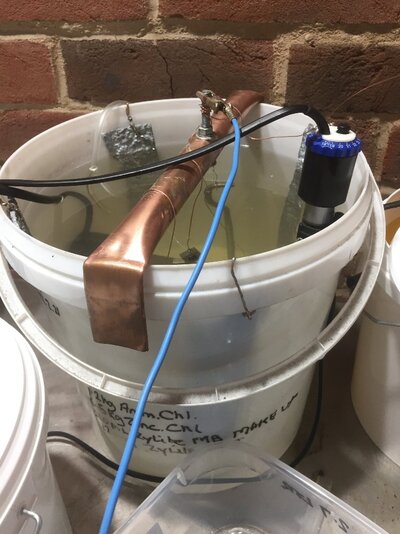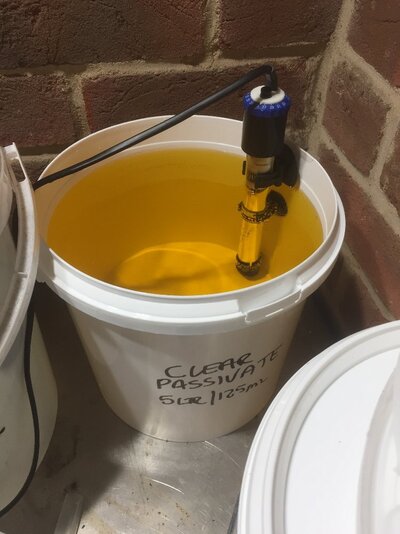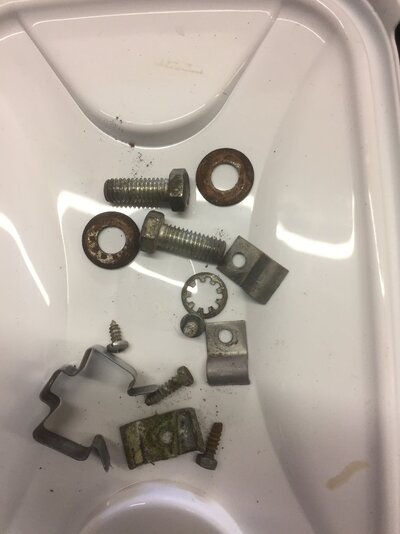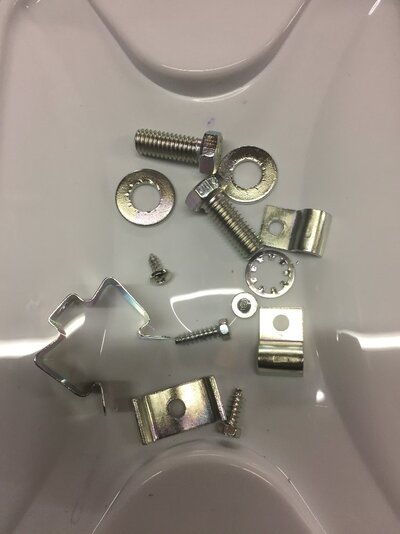

If you use a metal basket that will also get plated, using up solution, and massively increase the surface area.
A nylon mesh type basket could work, each part would need to be wired and the current calculated too.
I have tried electrolysis on small components using the basket from a chip pan and it didn't work very well.
Some components didn't get a good connection to the basket and it also didn't clean them evenly.
Electroplating is a similar process but in reverse.
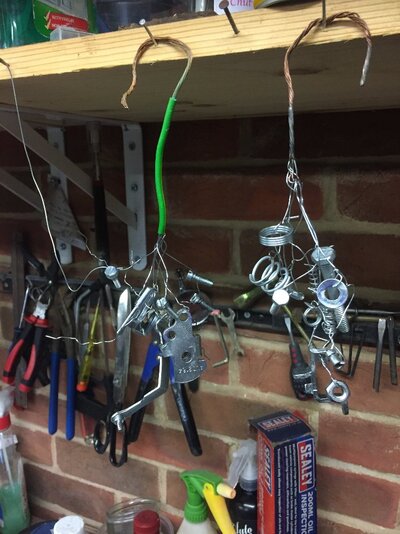
Run a few stainless bars across your tank and connect your electrode to them. Hang your items from the bar using copper wire stripped from t&e cable. Leave plenty of space between items so that they get evenly coated.
It'll be interesting to see the results you get - I intend to set my plating kit up again this summer, though I did say that last summer as well. If I remember correctly, I would say that the dull finish you have on the items in your photo will result in a dull finish after you've plated them.
The professional platers use a polymer horizontal cylindrical 'basket' that rotates with the axle just above the level of the solution. A 'dangler' transmits current from the metal axle to the components inside the basket.
Hard to imagine a small-scale version for a handful of parts, but I would love to copy your successful efforts! 3D printer job?
I have had success with a repurposed salad spinner hanging from a glitter ball rotarotor for electrolytic derusting, but not for plating.
I made small wire basket from titanium wire, but didn't use it in the end (you can buy ones online). I found using multi-strand stripped domestic electric cable to string up the pieces worked well.
The key is making sure the pieces are scrupulously clean (de-grease, wire wheel polish and acid clean) and you need to measure the surface area so the amps can be calculated. Buy some fish tank heaters to get everything up to the right temperature.
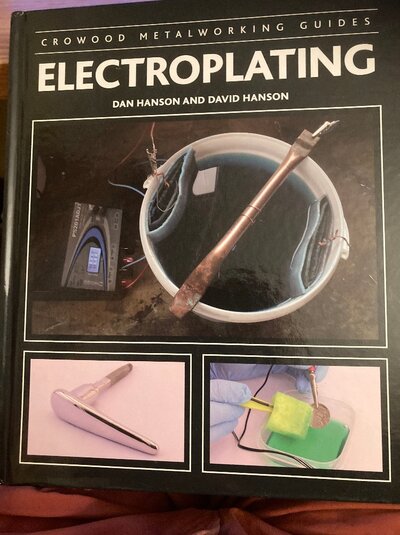
The owners of Gateros have published a book which I found very helpful.