



You are using an out of date browser. It may not display this or other websites correctly.
You should upgrade or use an alternative browser.
You should upgrade or use an alternative browser.
Loft condensation
- Thread starter Bryan Williams
- Start date

dobbslc
Member
- Messages
- 13,606
- Location
- Hertfordshire UK
As @Dapph2 said make sure the covers are good ones and not plastic pots! 50w halogen spot lights are fire starters and the reason the wiring regs got an update a couple of years ago to prevent this.the moisture will still get into the loft, can you pull one down, and see if you can add a plantpot / pot noodle pot?
As the owner of an old, draughty home, built early 70's, they most definitely can suffer from condensation.
When we moved in, my other half insisted it was just cold – I remember taking a shirt I had just taken out of a built-in wardrobe, were the back was an outside wall, and asking her if the water dripping from one side of it where it had touched the wall was “just cold?” - that wall I later discovered had two layers of stuck on polystyrene foam, so previous owners were obviously aware.
Cavity wall insulation (dry) with a foot or more of loft insulation (I think done for free for the previous elderly owners).
The bitumen roofing felt was dipping with condensation – the roofing timbers were stained from being wet in many previous years.
There was some soffit ventilation – the builder had closed most of the gaps by bricking on top of the wall plate between the rafters! In the gables each end of the main part (T-shaped house) there was a double air brick.
I had tile vents fitted – some low down, some high up.
I’ve not seen condensation on the felt since.
When we moved in, my other half insisted it was just cold – I remember taking a shirt I had just taken out of a built-in wardrobe, were the back was an outside wall, and asking her if the water dripping from one side of it where it had touched the wall was “just cold?” - that wall I later discovered had two layers of stuck on polystyrene foam, so previous owners were obviously aware.
Cavity wall insulation (dry) with a foot or more of loft insulation (I think done for free for the previous elderly owners).
The bitumen roofing felt was dipping with condensation – the roofing timbers were stained from being wet in many previous years.
There was some soffit ventilation – the builder had closed most of the gaps by bricking on top of the wall plate between the rafters! In the gables each end of the main part (T-shaped house) there was a double air brick.
I had tile vents fitted – some low down, some high up.
I’ve not seen condensation on the felt since.

Bryan Williams
Member
- Messages
- 1,239
- Location
- Manchester England
Yep their in Crosby not far from the docksIf the house is above a certain height, subject to Westerly winds carrying moisture you will have this issue, irrespective of any "leaks" from below. Absolutely they should vent the house every day, mornings are good, but really a dehumidifier is a must between Oct and March. You can vent the loft all you like, if the air coming through is laden with moisture you will, from time to time get condensation up there.

james butler
Member
- Messages
- 1,576
- Location
- birmingham england
i had a alloy loft ladder in the previous house and whenever i opened the loft hatch in winter the condensation formed instantly on the surface, you could actually see it happen and likewise would form immediately over the loft hatch area of felt.
as a habit i try not to go up in the loft in winter
i did fit some plastic membrane vents that slide between the felt layers to allow some air flow that seems to work ok.
as a habit i try not to go up in the loft in winter
i did fit some plastic membrane vents that slide between the felt layers to allow some air flow that seems to work ok.


rtcosic
Forum Supporter
- Messages
- 2,977
- Location
- Warwickshire
I have 4 Govee temperature and humidity monitors. They store months of data and are Bluetooth-connected to my mobile.
The unheated utility room with freezer, boiler, washing machine and vented tumble dryer is running around 21°C and 45% RH.
The usually unheated north facing first floor guest bedroom with three external walls is running around 15°C and 60% RH.
The loft is running 6-12°C and 80% RH and an average dew point of 6°C.
The garage, single wall brick, is running 5-10°C and 80% RH and an average dew point of 5°C.
I have whole house MVHR and the bathrooms run at about 45% RH when I have checked.
The loft has whatever ventilation is consistent with a 2020's build.
So the house loft and garage attic are both susceptible to some condensation on the felt in a narrow range of ambient temperature and humidity.
The unheated utility room with freezer, boiler, washing machine and vented tumble dryer is running around 21°C and 45% RH.
The usually unheated north facing first floor guest bedroom with three external walls is running around 15°C and 60% RH.
The loft is running 6-12°C and 80% RH and an average dew point of 6°C.
The garage, single wall brick, is running 5-10°C and 80% RH and an average dew point of 5°C.
I have whole house MVHR and the bathrooms run at about 45% RH when I have checked.
The loft has whatever ventilation is consistent with a 2020's build.
So the house loft and garage attic are both susceptible to some condensation on the felt in a narrow range of ambient temperature and humidity.

roofman
Purveyor of fine English buckets and mops
- Messages
- 13,021
- Location
- North West with water on 3 sides
Dont know how old you are matey, but a 1970,s home is not classed as old ...it was just after this era that the troubles started with the double glazing boom with plastic and aluminium windows. A house needs to breath as its a living entity with all the occupants in it...classic case is the fashion of removing chimney pots and capping the stacks resulting in the mid-feathers (inside brickwork) becoming dripping wet.As the owner of an old, draughty home, built early 70's, they most definitely can suffer from condensation.
When we moved in, my other half insisted it was just cold – I remember taking a shirt I had just taken out of a built-in wardrobe, were the back was an outside wall, and asking her if the water dripping from one side of it where it had touched the wall was “just cold?” - that wall I later discovered had two layers of stuck on polystyrene foam, so previous owners were obviously aware.
Cavity wall insulation (dry) with a foot or more of loft insulation (I think done for free for the previous elderly owners).
The bitumen roofing felt was dipping with condensation – the roofing timbers were stained from being wet in many previous years.
There was some soffit ventilation – the builder had closed most of the gaps by bricking on top of the wall plate between the rafters! In the gables each end of the main part (T-shaped house) there was a double air brick.
I had tile vents fitted – some low down, some high up.
I’ve not seen condensation on the felt since.
Its old enough to have fed several generations at least of wood worm. That's how I spotted the condensation, spraying all the timbers with suitable stuff. I guess 55 isn't old old - but it was certainly draughty. When the wind blew in the right direction, you could hear and feel it blow out around an internal door frame between living room and bedroom (its a bungalow).Dont know how old you are matey, but a 1970,s home is not classed as old ...it was just after this era that the troubles started with the double glazing boom with plastic and aluminium windows. A house needs to breath as its a living entity with all the occupants in it...classic case is the fashion of removing chimney pots and capping the stacks resulting in the mid-feathers (inside brickwork) becoming dripping wet.
Which then leads to the question - how come all the loft insulation, which covered every square inch of space, when rolled up to allow access to the ceiling support timbers, doesn't cover it when rolled back out . . . ?
Bryan Williams
Member
- Messages
- 1,239
- Location
- Manchester England
Does anyone have any advice/opinions on this particular of my post ..as in there needs to be extra insulation nearer the eaves on top of the cotton wool stuff and the thin layer of insulation..obviously stopping short of the eaves?No that's one of the things I mentioned..I cannot get right into the eaves yet but looking at it from middle there is some cotton wool type stuff laying thinly between the ceiling joists ,about 2 ft of it up to eaves then for about 5-6 ft coming back there is a layer of rockwool ,about 45 inches thick the n on top of that there a newer thick layer about 8-10 inches thick..
I would have thought the thick top layer would go almost to eaves with a small gap..not stepped down..
So I'm guessing that the whole loft space has the original 70s white cotton wool ball type stuff just between the ceiling joists,then someone's come along and put a thin layer of rock wool everywhere but stopped 2ft from the eaves..then someone's put another thicker layer on top but stopped where the roof pitch is about 2-3 ft high..stopping 5-6 ft from the eaves..probably letting heat in..
Cheers.

addjunkie
Member
- Messages
- 14,385
- Location
- Northumberland. Reet oot in the sticks
In the old days they used little kids to access awkward places, but your apparently not allowed to do that now……Does anyone have any advice/opinions on this particular of my post ..as in there needs to be extra insulation nearer the eaves on top of the cotton wool stuff and the thin layer of insulation..obviously stopping short of the eaves?
Cheers.
You could cut an angle of kingspan type stuff and slide it in foil side down. I tried in an 80s built house I owned to get right in the corner….my knees still haven't recovered in 25 years. But what ever you do it shouldn't touch the roof felt, air needs to circulate.

gaz1
Member
- Messages
- 20,453
- Location
- westyorkshire
a stated its not old but recent built reference built within last 60 years newer builds are known as box builds wood framed internals with solid outer wallsAs the owner of an old, draughty home, built early 70's, they most definitely can suffer from condensation.
When we moved in, my other half insisted it was just cold – I remember taking a shirt I had just taken out of a built-in wardrobe, were the back was an outside wall, and asking her if the water dripping from one side of it where it had touched the wall was “just cold?” - that wall I later discovered had two layers of stuck on polystyrene foam, so previous owners were obviously aware.
Cavity wall insulation (dry) with a foot or more of loft insulation (I think done for free for the previous elderly owners).
The bitumen roofing felt was dipping with condensation – the roofing timbers were stained from being wet in many previous years.
There was some soffit ventilation – the builder had closed most of the gaps by bricking on top of the wall plate between the rafters! In the gables each end of the main part (T-shaped house) there was a double air brick.
I had tile vents fitted – some low down, some high up.
I’ve not seen condensation on the felt since.
as goes for materials they are all sealing types from the plaster to the bitumen roofing felt older materials are breathable
as for insulation different sizes not bagged and ticketed by numbers to go back where they belongIts old enough to have fed several generations at least of wood worm. That's how I spotted the condensation, spraying all the timbers with suitable stuff. I guess 55 isn't old old - but it was certainly draughty. When the wind blew in the right direction, you could hear and feel it blow out around an internal door frame between living room and bedroom (its a bungalow).
Which then leads to the question - how come all the loft insulation, which covered every square inch of space, when rolled up to allow access to the ceiling support timbers, doesn't cover it when rolled back out . . . ?
Pigeon_Droppings2
Member
- Messages
- 6,695
- Location
- london
I did exactly the same with my knees tooI tried in an 80s built house I owned to get right in the corner….my knees still haven't recovered in 25 years


Smallfry
HE's Spartacus.
- Messages
- 2,942
- Location
- Kent UK
I had to use crawling boards for this ......... and it was a few years ago now, when my knees were not so bad.Does anyone have any advice/opinions on this particular of my post ..as in there needs to be extra insulation nearer the eaves on top of the cotton wool stuff and the thin layer of insulation..obviously stopping short of the eaves?
Cheers.
What I did with mums house was cut 3 foot lengths of 2 x 1 roofing batten, and slid them down each side of the rafters, long side vertical, 6 inches beyond the wall plate. Pressing them up to the membrane, then screwing them to the rafters as far as I could reach into the eaves.
This was to create spacers for a 2 inch airgap between the membrane, and the Celotex/ Kingspan sheets I had cut to fit between the rafters, again 3 feet by whatever the rafter spacing was. This was slid down between the rafters to just beyond the wallplate, out into the soffit/fascia space.
After this, I poked the rockwool into the wedge shaped gap created, then butted up more 150mm rockwool at 90 degrees to the joists, then another 150mm at 90 degrees to that, eventually covering the whole loft floor.
While doing this I incorporated a floored area, but that's another story.
A picture paints a thousand words and all that, so I will take some photos next time I am there if you wish, but as I said earlier, it still gets condensation, probably worse in fact despite this. I still think ridge venting, or tile vents near the ridge are the answer, to let any warm air out.
Does anyone have any advice/opinions on this particular of my post ..as in there needs to be extra insulation nearer the eaves on top of the cotton wool stuff and the thin layer of insulation..obviously stopping short of the eaves?
Cheers.
Ideally you want equivalent of 300mm total thickness of modern fluffy stuff to extend as far as possible to the edges. The only gap that needs leaving is just enough to keep outside air flow across the loft space which means the insulation will be tapering to match the roof pitch, but not 5-6 feet!
Vent trays are helpful to achieve and maintain that gap.
I'm fairly sure I still have some left over which you're welcome to, if they are of use.
Of course this does not addresses the condensation entering the loft - for that, seal everything you can get to. e.g.
Loft hatch - Made-to measure sealed and insulated hatches are relatively affordable and can make a big difference (also for heat loss).
Lighting - not just downlighters - also check there aren't gaping holes above regular ceiling roses in all rooms.
Pipes/cable runs etc. Again seal all these points
gaz1
Member
- Messages
- 20,453
- Location
- westyorkshire
eaves of a house dont not need alot of insulation the maximum required for the loft is 8" you can go 4-6" thick with top layer overlapping the bottom layerDoes anyone have any advice/opinions on this particular of my post ..as in there needs to be extra insulation nearer the eaves on top of the cotton wool stuff and the thin layer of insulation..obviously stopping short of the eaves?
Cheers.
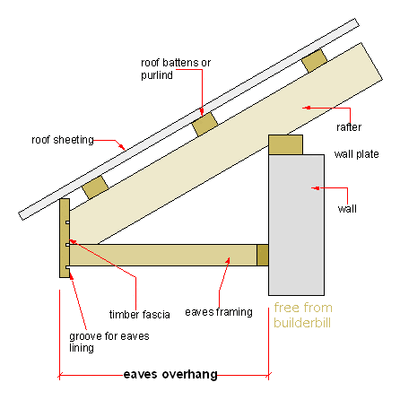
where the wall plate is there is 2 walls an outer wall and an inner wall with insulation your only bridging the first wall with insulation the outer wall dosnt really get it but with eaves this does happen
you need air to go up into the eaves as it aids in stopping the rotting of the eves but allows a cold roof into the loft area over the wall plate via the rafter and down the other side if this area is filled with insulation your roof isnt breathing
any rad pipes will need insulating and the same goes for cold tanks and pipes up there rad pipes do cause condensation as they are direct to cold air so condensate rather well
loft door use a rubber seal to seal it or brush with seal outside door seals are the same also insulate the door itself your choice on its method from 4" insulation board screwed to the trap door or insulation material glass fibre roll
if its just a wood seal its still bleads through from the house
Bryan Williams
Member
- Messages
- 1,239
- Location
- Manchester England
Brilliant,cheerseaves of a house dont not need alot of insulation the maximum required for the loft is 8" you can go 4-6" thick with top layer overlapping the bottom layer
View attachment 527589
where the wall plate is there is 2 walls an outer wall and an inner wall with insulation your only bridging the first wall with insulation the outer wall dosnt really get it but with eaves this does happen
you need air to go up into the eaves as it aids in stopping the rotting of the eves but allows a cold roof into the loft area over the wall plate via the rafter and down the other side if this area is filled with insulation your roof isnt breathing
any rad pipes will need insulating and the same goes for cold tanks and pipes up there rad pipes do cause condensation as they are direct to cold air so condensate rather well
loft door use a rubber seal to seal it or brush with seal outside door seals are the same also insulate the door itself your choice on its method from 4" insulation board screwed to the trap door or insulation material glass fibre roll
if its just a wood seal its still bleads through from the house
Arclikeharrypotter
Member
- Messages
- 1,245
- Location
- Northampton
Think I’m going to try these myself, the massive changes in temperature we have doesn’t help with condensation!i had a alloy loft ladder in the previous house and whenever i opened the loft hatch in winter the condensation formed instantly on the surface, you could actually see it happen and likewise would form immediately over the loft hatch area of felt.
as a habit i try not to go up in the loft in winter
i did fit some plastic membrane vents that slide between the felt layers to allow some air flow that seems to work ok.
55 to 60 years old.a stated its not old but recent built reference built within last 60 years newer builds are known as box builds wood framed internals with solid outer walls
Brick cavity walls, brick and concrete block inner walls - some of them sod ding hard work to cut wire runs and sockets into. The only timber frame is to enclose the bathroom I created from knocking the loo and original bath only room into one.
Suspended floor, draughty as heck when I moved in, howling gale around all floors and up the chimney.
But the roof condensation due to little or no ventilation into the space and old, non-breathable felt. Since it was vented, good air in and out, meaning the loft space is at outside temp, no condensation in the loft.

xillent
Member
- Messages
- 100
- Location
- Glasgow
Haha. I did laugh at that. My job was to go up and thaw out the pipes in the winter with a hairdryer. My dad had built the loft hatch too small for him to get up (supposedly)In the old days they used little kids to access awkward places, but your apparently not allowed to do that now……
You could cut an angle of kingspan type stuff and slide it in foil side down. I tried in an 80s built house I owned to get right in the corner….my knees still haven't recovered in 25 years. But what ever you do it shouldn't touch the roof felt, air needs to circulate.