



You are using an out of date browser. It may not display this or other websites correctly.
You should upgrade or use an alternative browser.
You should upgrade or use an alternative browser.
JLR Workshop fun
- Thread starter Ubique
- Start date


addjunkie
Member
- Messages
- 14,907
- Location
- Northumberland. Reet oot in the sticks
An engine isnt the issue, its all the crap they stick around themI've had that on the last couple of vans.
It will go from no start in 900 miles to no start in 500 miles but only takes about 120 miles to do that
Modern diesels, I **** them!

Ubique
Member
- Messages
- 2,648
- Location
- East Midlands
The trouble is, it'll never run right - the 'emissions stuff' particularly the low pressure EGR & DPF contribute to to correct combustion conditions and therefore Stoichiometric Combustion (actually, slightly leaner) and even the oil grade (more importantly the oil specification) has a bearing on engine longevity as well as emissions. Personally, if I was that bothered about oil, I'd send off regular samples for testing. The correct specification of oil with a high shear strength will be far better for the engine than a higher viscosity.I deleted the centre silencer, cat and EGR on my Td5 Defender 16 years ago - the MoT man in Devon spotted it and asked where I got the kitStill going strong to this day.
I think the only way I’d buy a modern diesel is if I could delete the EGR, DPF and adblue. And run it on the next oil grade up.
Sixteen year old emissions controls were a lot more 'bolt-on' and impacted the engine less if bypassed than current systems, it's a bit like the 'I bought this years ago and it's the best ever' comments on 'recommend me a ....' threads, you can never get something now that is built to the standards in place 16 years ago.
Ubique
Member
- Messages
- 2,648
- Location
- East Midlands
A slight addition, manufacturers would have done a much better job of it if left to develop emission reductions naturally, not hit some notional target driven by the agenda and funding from lobby groups.An engine isnt the issue, its all the crap they're forced by legislation to stick around them
But would they have bothered to? Without a target or backstop to meet would there have been any benefit to them reducing emissions?A slight addition, manufacturers would have done a much better job of it if left to develop emission reductions naturally, not hit some notional target driven by the agenda and funding from lobby groups.
Guineafowl
Member
- Messages
- 1,548
- Location
- Nairn
Td5 is actually a 2002, so yes, easy to strip away the rubbish. As for the oil viscosity, I’m going by the LRtime YT channel, who run 5w40 not 5w30 in their TDV6s, same spec. The chap is an engineer and has done some big-end and main bearing analysis on various rebuilds. It appears the 5w40 has a beneficial effect, but it’s early days.
I’ll keep the Td5 running forever, hopefully, but for the wife, its petrols from now on.
I’ll keep the Td5 running forever, hopefully, but for the wife, its petrols from now on.
Ubique
Member
- Messages
- 2,648
- Location
- East Midlands
I believe so yes, take DPF's for example, all they do is store soot for a while and then chuck it out over a short period of time. Originally developed for the German market where lots of journeys involve fast-road between work and home locations, ideal for the DPF model. Not so ideal for the crowded UK. Lots of emissions control was already in place or under development before the EU (and increasingly the busybody UN) stuck their beak in. Oxygen sensors are one such example, as are catalysts, even knock sensors (in petrol engined cars) have a beneficial reduction in emissions.But would they have bothered to? Without a target or backstop to meet would there have been any benefit to them reducing emissions?
I can't remember the details, there were (apparently) better alternatives independently under development when funding was re-routed to the EU-mandated DPF implementation.
I believe SCR was another choice made by the EU against advice from engineers, but supported by agenda-driven lobby groups.
One of the downsides - and IMO it's a big one, is the current particulate emission standards force manufacturers to trap soot above a certain size, the inference (and reality) is that below that size, it's allowable. The big problem with that, is the size is such that particulates can pass through the blood barrier in human lungs, thereby directly accessing the bloodstream, neatly bypassing our inbuilt ability to filter out crap in the air we breathe.
Thank you for such a sensible reply to my question. I suppose in my naivety I'd never even considered most of the points made above, but you make a compelling and logical argument.I believe so yes, take DPF's for example, all they do is store soot for a while and then chuck it out over a short period of time. Originally developed for the German market where lots of journeys involve fast-road between work and home locations, ideal for the DPF model. Not so ideal for the crowded UK. Lots of emissions control was already in place or under development before the EU (and increasingly the busybody UN) stuck their beak in. Oxygen sensors are one such example, as are catalysts, even knock sensors (in petrol engined cars) have a beneficial reduction in emissions.
I can't remember the details, there were (apparently) better alternatives independently under development when funding was re-routed to the EU-mandated DPF implementation.
I believe SCR was another choice made by the EU against advice from engineers, but supported by agenda-driven lobby groups.
One of the downsides - and IMO it's a big one, is the current particulate emission standards force manufacturers to trap soot above a certain size, the inference (and reality) is that below that size, it's allowable. The big problem with that, is the size is such that particulates can pass through the blood barrier in human lungs, thereby directly accessing the bloodstream, neatly bypassing our inbuilt ability to filter out crap in the air we breathe.

Ubique
Member
- Messages
- 2,648
- Location
- East Midlands
I have to admit, I'm not one of LRTime's watchers - they've been taken to task a few times by actual, experienced, qualified and accredited engine development engineers (a couple of which I'm on 'personal email' terms with) - privately, not in public. Their response is always 'it's just entertainment and our opinions', which, given the small sample size is valid but potentially misleading to those watching their entertainment.Td5 is actually a 2002, so yes, easy to strip away the rubbish. As for the oil viscosity, I’m going by the LRtime YT channel, who run 5w40 not 5w30 in their TDV6s, same spec. The chap is an engineer and has done some big-end and main bearing analysis on various rebuilds. It appears the 5w40 has a beneficial effect, but it’s early days.
I’ll keep the Td5 running forever, hopefully, but for the wife, its petrols from now on.
As I've not experienced any of their output, I'll leave it there.
I'm also not sure that they are understanding oil viscosity, a 5W40 will take longer to reach the moving parts than 5W30 in a cold engine and more will return to sump from the oil pressure control valve - so there will be less oil circulating at any temperature.
https://precisionlubrication.com/articles/oil-viscosity/ refers - mainly to gear oils but the principles especially shear rate (I incorrectly called shear strength in a post above) are valid, and of course, a different viscosity will not have the correct specification which has been carefully matched by engineers to the requirements of the engine - not just lubrication, but things like hydraulic lifters, variable valve timing, oil control valve PWM values, piston cooling jets etc.
I've no particular objection to what LR time do, I'm naturally questioning of opinions passed as facts, which is probably why I enjoy the job I do!
Ubique
Member
- Messages
- 2,648
- Location
- East Midlands
I do believe public opinion is a better driver than legislation (like advertising, if it's that good, it will sell itself), IIRC Ford were working on market specific emission mitigation systems, as ever, if one manufacturer comes up with something the public see as 'good' then others will try and leapfrog their innovation. After all, the EU's intervention was due to increasing concern over emissions (of which vehicles were a small, but easily targeted part).Thank you for such a sensible reply to my question. I suppose in my naivety I'd never even considered most of the points made above, but you make a compelling and logical argument.
If you go back to the end of leaded fuel, there was a lot of hype about it. In the end, lead pollution was reduced worldwide by just 2%, a lot of vehicles were scrapped or needed costly modifications - but the lead pollution on heavily congested streets & roads was reduced - all led (or lead!) by public pressure for legislation.
Ubique
Member
- Messages
- 2,648
- Location
- East Midlands
No engine starts in 500 miles, SCR system fault.
A quick copy & paste from Wikipedia to establish a baseline understanding of how SCR works
Diesel engines are typically operated with a lean burn air-to-fuel ratio (over-stoichiometric ratio) to ensure the full combustion of soot and to prevent them from exhausting unburnt fuel. The excess air leads to the generation of NOx which are harmful pollutants, from nitrogen in the atmosphere. Selective catalytic reduction is used to reduce the amount of NOx released into the atmosphere. DEF from a separate tank is injected into the exhaust pipeline, and the exhaust heat decomposes it to ammonia. Within the SCR catalyst, the NOx are reduced by the ammonia into water and nitrogen, which are both nonpolluting. The water and nitrogen are then released into the atmosphere through the exhaust.

 en.wikipedia.org
There are various implementations of SCR, some with one NOx sensor, some with two, some with more. The SCR catalyst is upstream of the DPF with the DEF (Diesel Exhaust Fluid - 'AdBlue') dosing/metering valve upstream of it, spraying at an angle across the inlet to the SCR. DEF is synthetic Urea (originally pig urine was used in development) and is diluted with deionised water to a concentration of 32.5% Urea.
The DEF tank is heated to prevent freezing, as are the pressure lines, some implementations have a heated metering valve. The pump module pressurises the DEF line up to 8Bar, working pressure is 6.5Bar to 7.5Bar, system dependent, the high pressure is required to provide efficient atomisation.
Monitoring of the system
DEF level - an 'inducement' warning is given when the tank level is low, note that this message does not mention a fault, just the range left or the amount of fluid needed.
Heater status
Metering valve connection
Leak detection / pressure monitoring
DEF quality - inferred on system with two or more NOx sensors, not measured.
SCR efficiency - inferred on single NOx sensor systems, calculated on multiple NOx sensor systems.
NOx sensor communications and plausibility.
So back to our warning message, the DTC's don't give any hint of a hardware defect or a leak
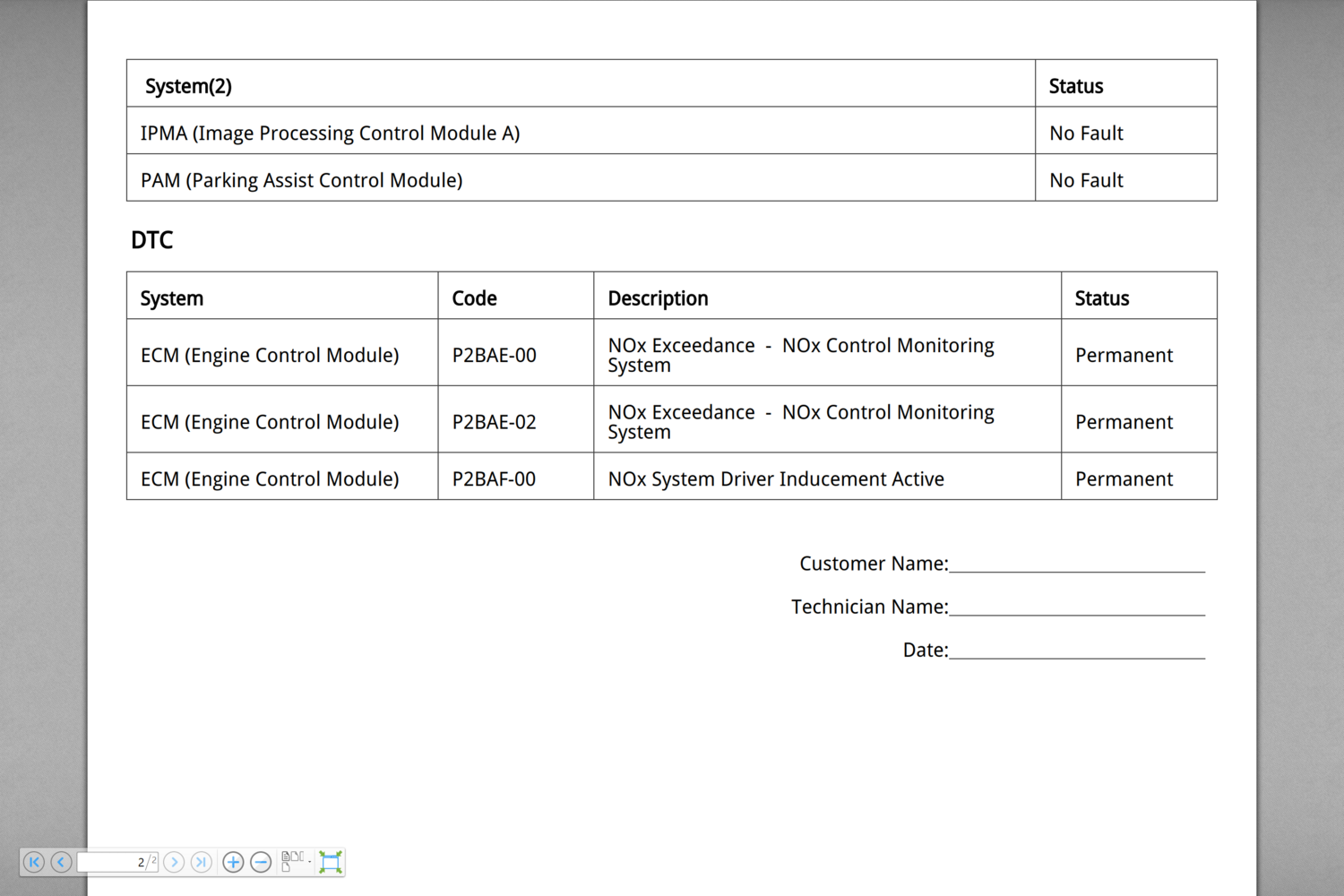
All that's indicated is the efficiency of the NOx reduction is below the expected minimum, the third DTC indicates the 'no starts in xxx....' countdown has started.
So given the above, there is no option but to verify the operation of the system - not difficult but long-winded, and also reinforces the value and need to test linearly.
First up - can the system generate the correct pressure in the required time? simple yes/no test via diagnostics (worth noting that st this stage I switched to SDD [2015 vehicle] as Topdon, as good as it is, doesn't have the SCR test functions for LR)
After a depressurise and re-pressurise of the system, 8Bar was achieved within 40 seconds - a pass.
Next test - metering valve spray pattern - with the valve removed from the exhaust you place some coffee filter like paper across the valve and observe the spray pattern, I didn't get a picture of the test paper as it spreads quite quickly - it should have three distinct lobes, this was just a oddly shaped blob.
On SDD you highlight a photo that best matches the test result which determines the next action, in this case it runs a cleaning procedure at an elevated pressure, then a re-test.
The cleaning process had some positive effect, so on to the next test - check of delivered quantity of DEF, this runs for 480 seconds, with an expected delivery of between 5.4ml and 6.4ml - if this test passes, then a higher rate test is carried out with an expected delivery of 25 to 26.5ml.
The initial test failed with around 5.2ml delivered.
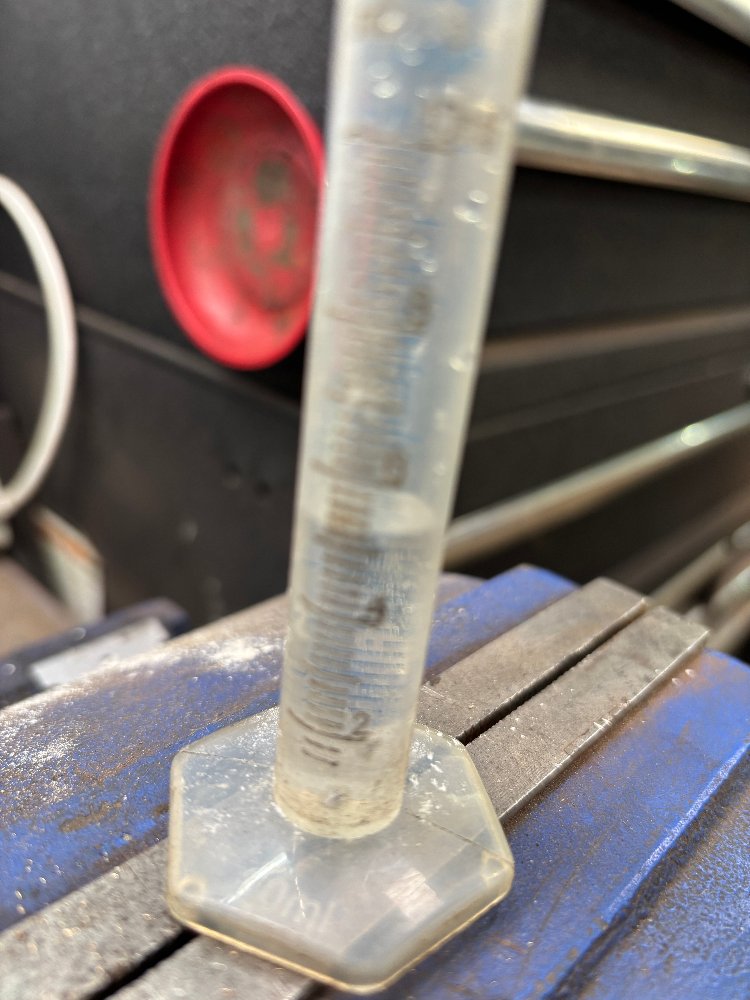
It's important to be accurate and recognise that the minimum is the minimum, not 'well 5.2 is nearly 5.4', inputting the measured quantity into SDD gives us the following:
The dosing module has a restriction that cannot be cleared.
Replace dosing module for a new unit
Ensure the application - 'Diesel exhaust fluid prime and pressure test' is carried out prior to customer handover.
So the metering valve / dosing module is replaced, the SCR adaptions cleared and engine started - within seconds, the EML is on....
Entirely because I didn't follow the instructions! - intentionally, no, really!
The original DTC's were cleared but now we have a new one
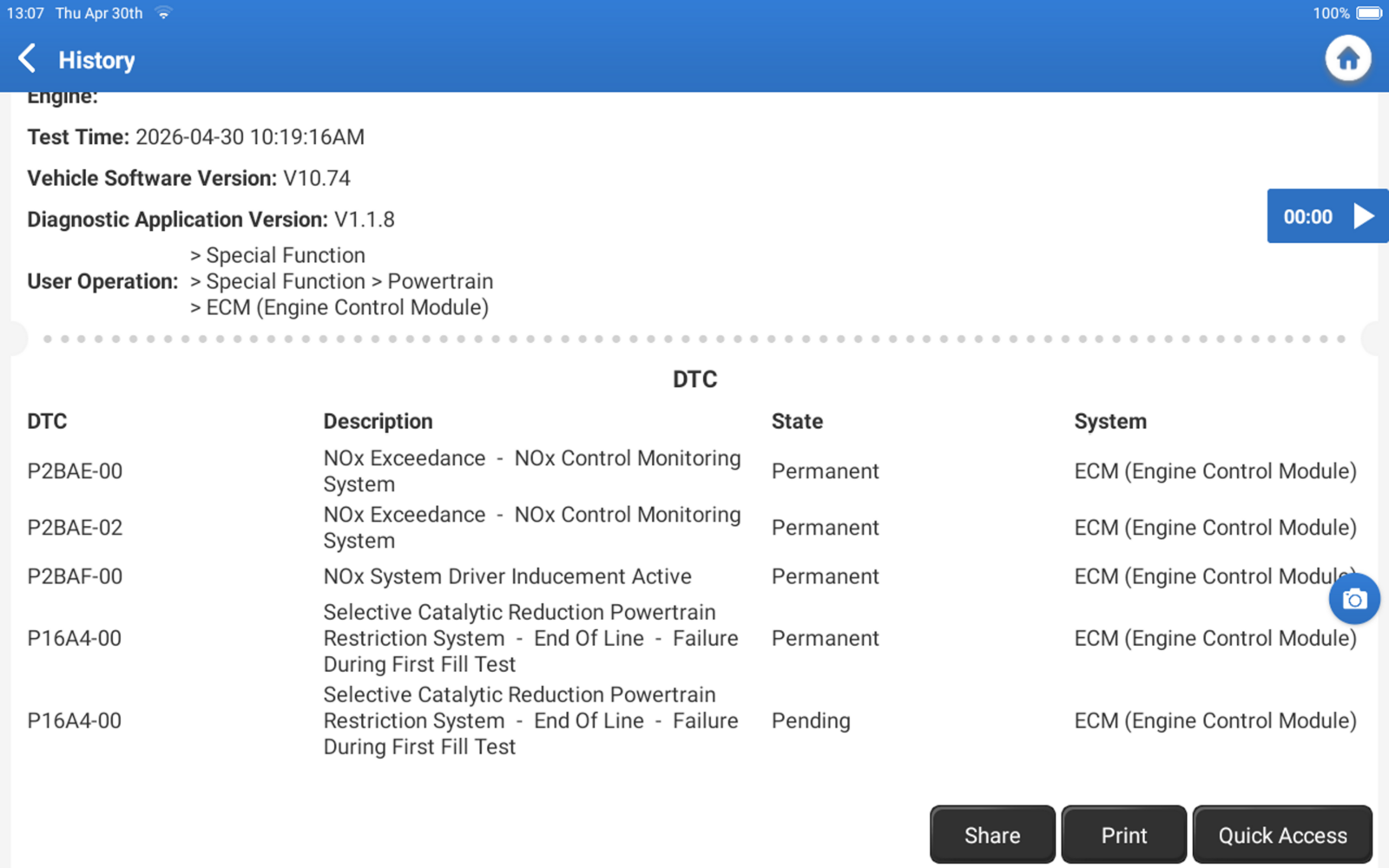
P16A4-00 Failiure during first fill test - entirely because the fluid line and dosing module were not purged as instructed, the monitoring of the pressure line detected fluctuations due to the small amount of air being compressed. Running the purge & pressure test application resolved the issue.
All done, right?
Nope. think back as to how the SCR efficiency is monitored - downstream NOx sensor (in this case, the only NOx sensor, so now we know that the quantity of DEF being delivered is in the correct range (belt-and-braces, I did re-start the delivery test with the replacement dosing module fitted, both tests passed.) so we need to ensure that the monitoring is correct, before that, a word on adaptive values.....
In SCR systems, there is a learning function, to take account of component ageing, this is initiated every DEF tank fill. The problem is, few people will actually fill the DEF tank, just put in one container to 'get the light off' - something the coders didn't take account of and put in a time limit for adaption to take place, so a lot of systems are just out of calibration - easily fixed by filling, not over-filling the DEF tank and driving for 40-60 minutes, you'll know when it's completed the process as the SCR warning light will extinguish, no diagnostic equipment needed.
Anyway, back to confirmation road test, another little-known part of the coding is that DEF dosing and NOx downstream monitoring is inactive for the first 20 minutes of every drive cycle (this can create problems with catalyst load in vehicles that endure lots of short journeys, causing a shock load when there is eventually a long journey - predictably pinging on a warning...)
So here's the first page of live values
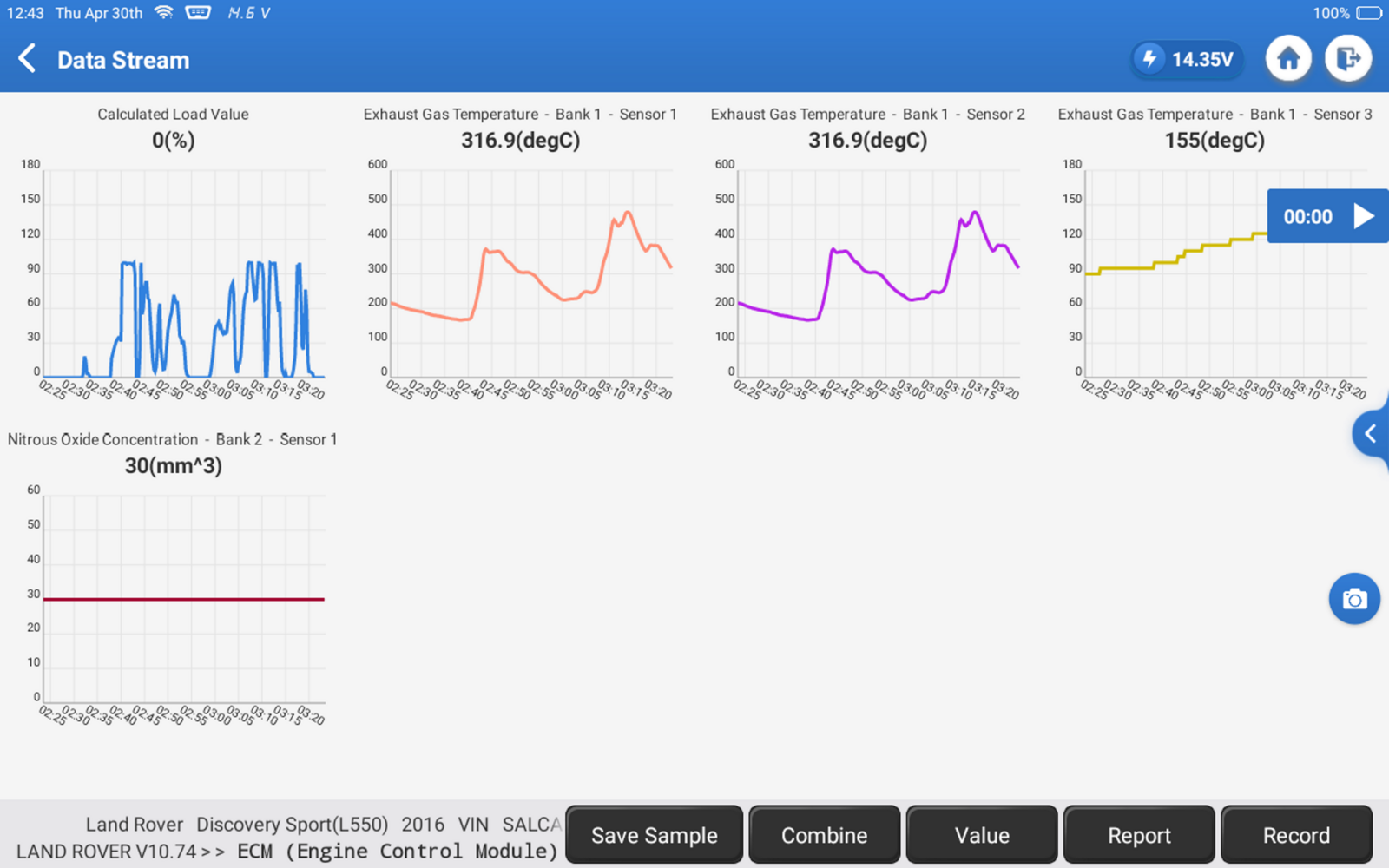
EGT's are monitored to ensure there is no DPF regen going on, this also inhibits DEF dosing, engine load is monitored so as to provide a frame of reference for NOx concentration. You can see the default 30mm3 value - note that the times are off as the engine was running for some time before the values were monitored.
And we're off!
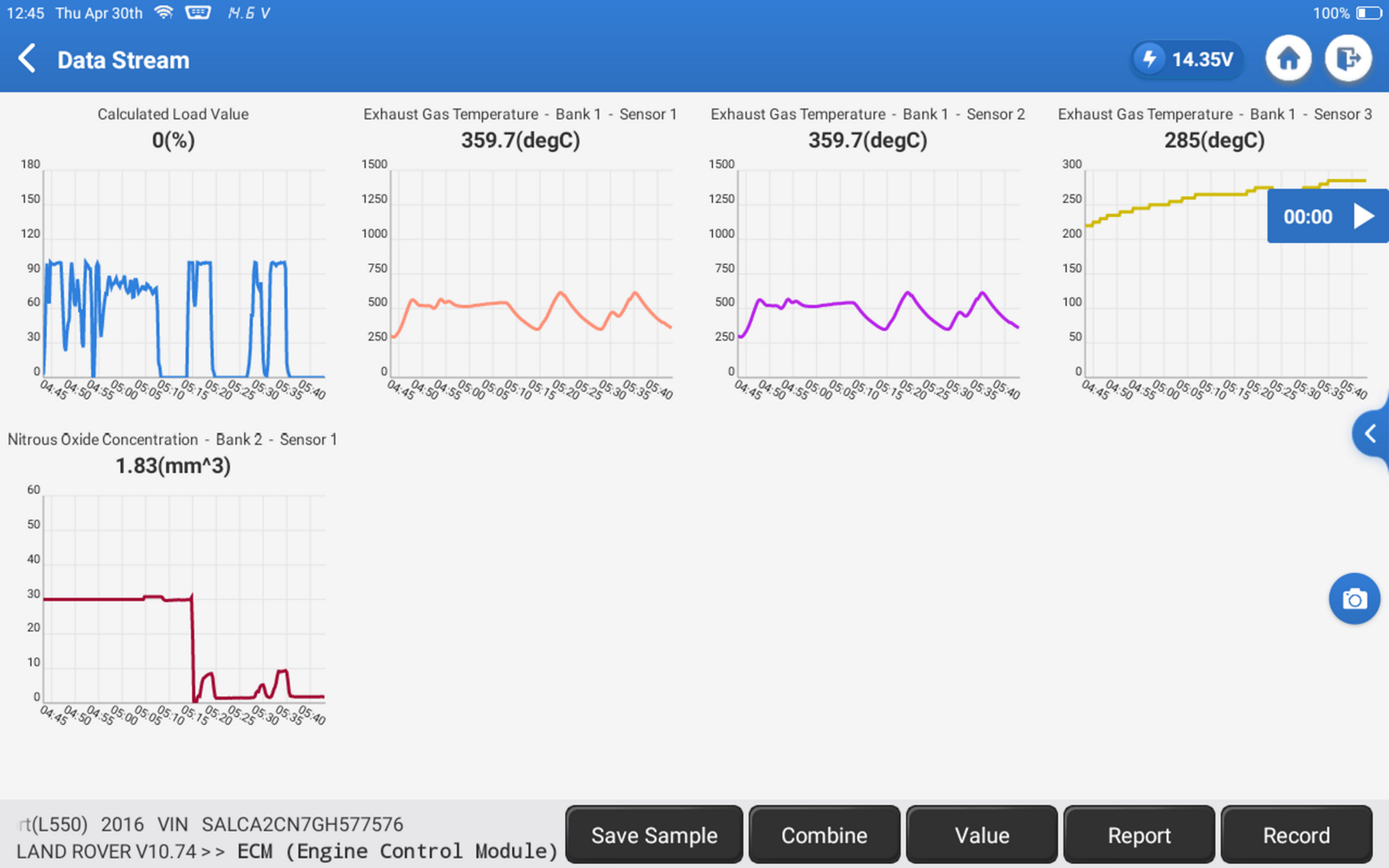
NOx, & EGT's varying with load, further checks with 'enthusiastic' and 'retired pootling' driving confirm values as expected, it's possible to monitor DEF quantity inferred but that would mean running SDD data logger, as it's not required in this instance, it was easier to just use Topdon Xlink.
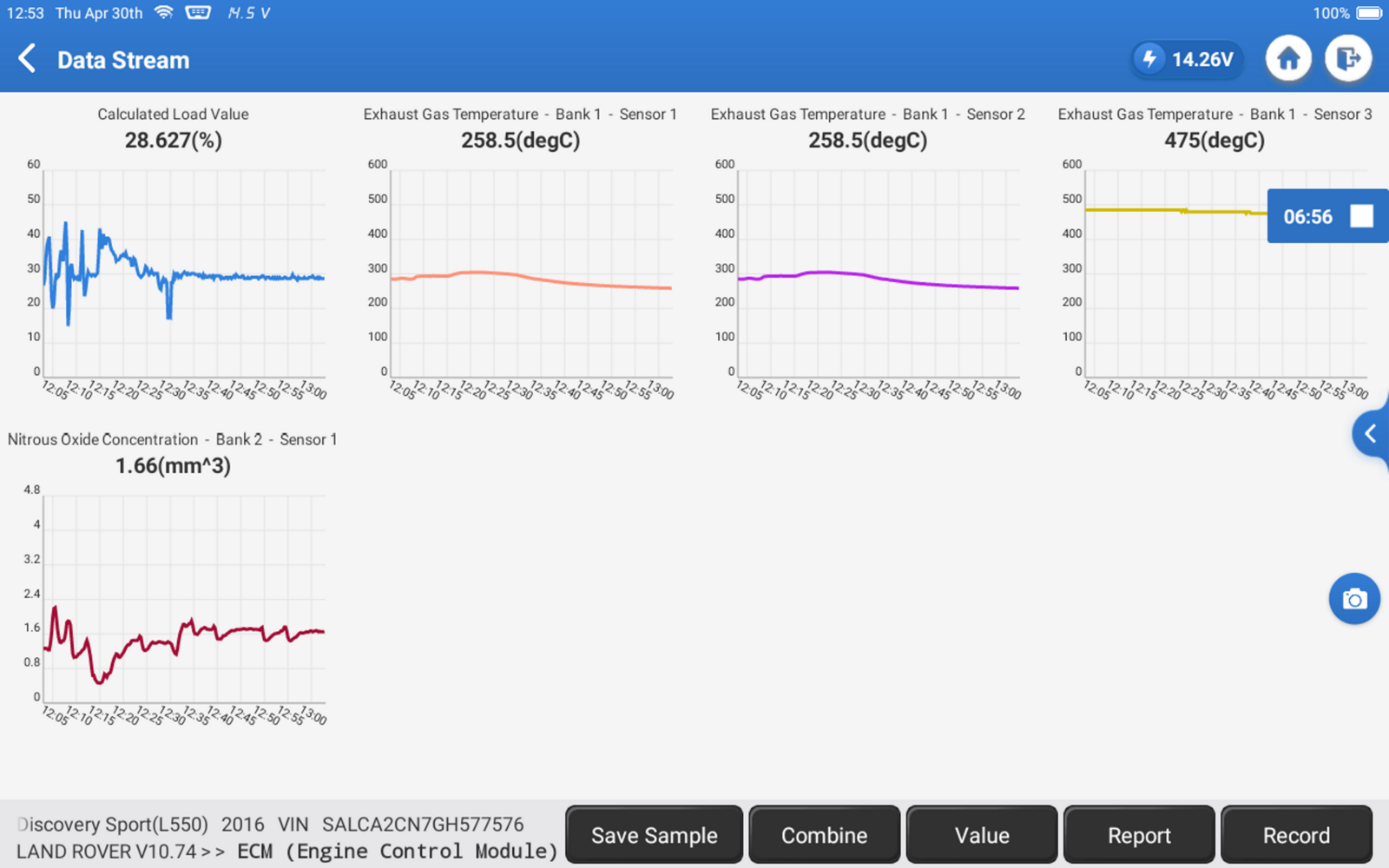
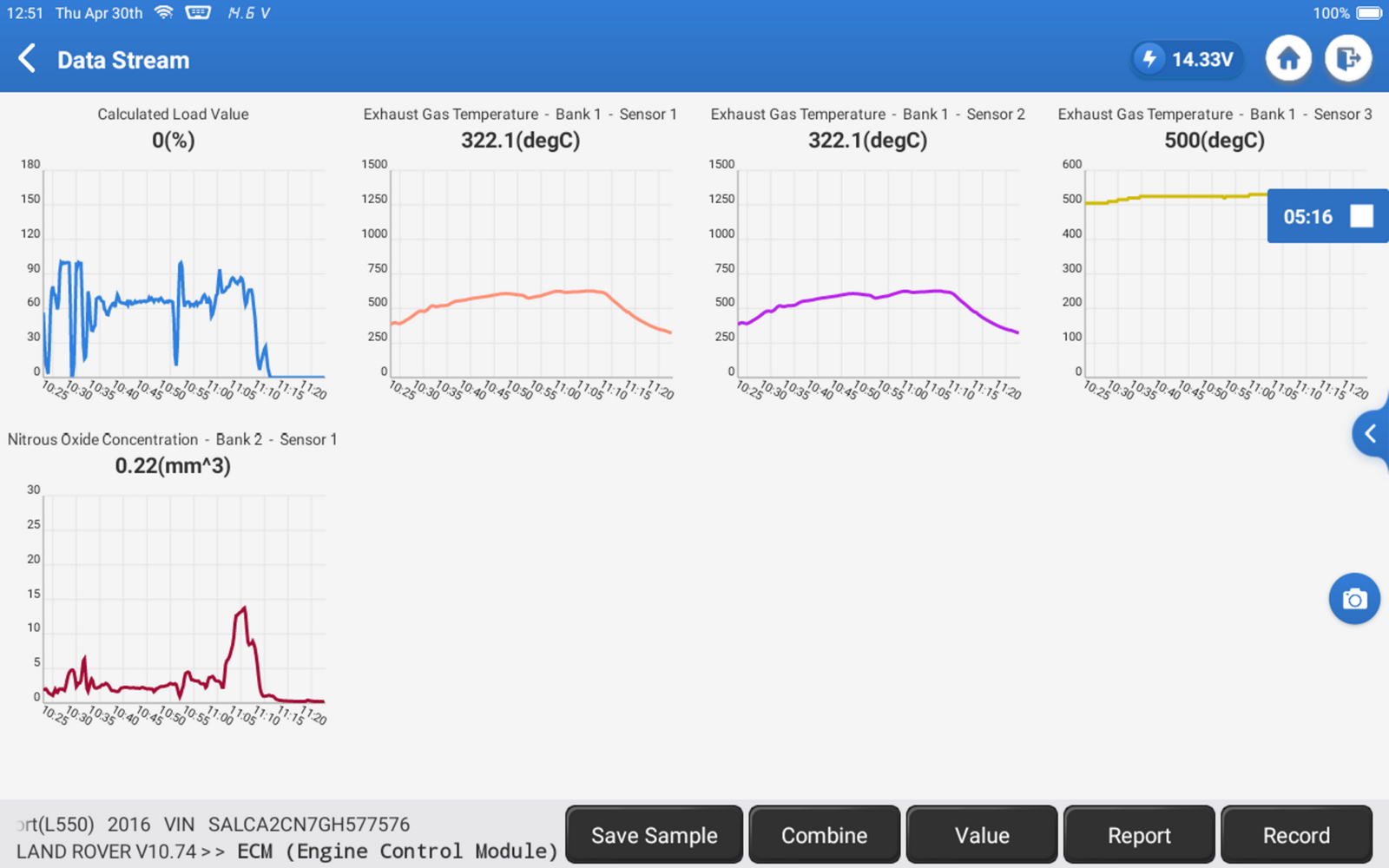
So there we go, the point about the 20 minute inhibit on downstream NOx values is an important one, it'd be very easy to do a quick road test and condemn the downstream NOx sensor as the value doesn't change - £300 spent and the root cause would still be there.
I hope that makes sense and demystifies how it functions - there will always be hardware faults that will have specific DTC's set, but when you get NOX exceedance or 'Low DEF Quality' it pays to work your way through the system - it's possible the NOx sensor could've been at fault, but deal with upstream defects first, then test and verify your work.
A quick copy & paste from Wikipedia to establish a baseline understanding of how SCR works
Diesel engines are typically operated with a lean burn air-to-fuel ratio (over-stoichiometric ratio) to ensure the full combustion of soot and to prevent them from exhausting unburnt fuel. The excess air leads to the generation of NOx which are harmful pollutants, from nitrogen in the atmosphere. Selective catalytic reduction is used to reduce the amount of NOx released into the atmosphere. DEF from a separate tank is injected into the exhaust pipeline, and the exhaust heat decomposes it to ammonia. Within the SCR catalyst, the NOx are reduced by the ammonia into water and nitrogen, which are both nonpolluting. The water and nitrogen are then released into the atmosphere through the exhaust.
Diesel exhaust fluid - Wikipedia
There are various implementations of SCR, some with one NOx sensor, some with two, some with more. The SCR catalyst is upstream of the DPF with the DEF (Diesel Exhaust Fluid - 'AdBlue') dosing/metering valve upstream of it, spraying at an angle across the inlet to the SCR. DEF is synthetic Urea (originally pig urine was used in development) and is diluted with deionised water to a concentration of 32.5% Urea.
The DEF tank is heated to prevent freezing, as are the pressure lines, some implementations have a heated metering valve. The pump module pressurises the DEF line up to 8Bar, working pressure is 6.5Bar to 7.5Bar, system dependent, the high pressure is required to provide efficient atomisation.
Monitoring of the system
DEF level - an 'inducement' warning is given when the tank level is low, note that this message does not mention a fault, just the range left or the amount of fluid needed.
Heater status
Metering valve connection
Leak detection / pressure monitoring
DEF quality - inferred on system with two or more NOx sensors, not measured.
SCR efficiency - inferred on single NOx sensor systems, calculated on multiple NOx sensor systems.
NOx sensor communications and plausibility.
So back to our warning message, the DTC's don't give any hint of a hardware defect or a leak
All that's indicated is the efficiency of the NOx reduction is below the expected minimum, the third DTC indicates the 'no starts in xxx....' countdown has started.
So given the above, there is no option but to verify the operation of the system - not difficult but long-winded, and also reinforces the value and need to test linearly.
First up - can the system generate the correct pressure in the required time? simple yes/no test via diagnostics (worth noting that st this stage I switched to SDD [2015 vehicle] as Topdon, as good as it is, doesn't have the SCR test functions for LR)
After a depressurise and re-pressurise of the system, 8Bar was achieved within 40 seconds - a pass.
Next test - metering valve spray pattern - with the valve removed from the exhaust you place some coffee filter like paper across the valve and observe the spray pattern, I didn't get a picture of the test paper as it spreads quite quickly - it should have three distinct lobes, this was just a oddly shaped blob.
On SDD you highlight a photo that best matches the test result which determines the next action, in this case it runs a cleaning procedure at an elevated pressure, then a re-test.
The cleaning process had some positive effect, so on to the next test - check of delivered quantity of DEF, this runs for 480 seconds, with an expected delivery of between 5.4ml and 6.4ml - if this test passes, then a higher rate test is carried out with an expected delivery of 25 to 26.5ml.
The initial test failed with around 5.2ml delivered.
It's important to be accurate and recognise that the minimum is the minimum, not 'well 5.2 is nearly 5.4', inputting the measured quantity into SDD gives us the following:
The dosing module has a restriction that cannot be cleared.
Replace dosing module for a new unit
Ensure the application - 'Diesel exhaust fluid prime and pressure test' is carried out prior to customer handover.
So the metering valve / dosing module is replaced, the SCR adaptions cleared and engine started - within seconds, the EML is on....
Entirely because I didn't follow the instructions! - intentionally, no, really!
The original DTC's were cleared but now we have a new one
P16A4-00 Failiure during first fill test - entirely because the fluid line and dosing module were not purged as instructed, the monitoring of the pressure line detected fluctuations due to the small amount of air being compressed. Running the purge & pressure test application resolved the issue.
All done, right?
Nope. think back as to how the SCR efficiency is monitored - downstream NOx sensor (in this case, the only NOx sensor, so now we know that the quantity of DEF being delivered is in the correct range (belt-and-braces, I did re-start the delivery test with the replacement dosing module fitted, both tests passed.) so we need to ensure that the monitoring is correct, before that, a word on adaptive values.....
In SCR systems, there is a learning function, to take account of component ageing, this is initiated every DEF tank fill. The problem is, few people will actually fill the DEF tank, just put in one container to 'get the light off' - something the coders didn't take account of and put in a time limit for adaption to take place, so a lot of systems are just out of calibration - easily fixed by filling, not over-filling the DEF tank and driving for 40-60 minutes, you'll know when it's completed the process as the SCR warning light will extinguish, no diagnostic equipment needed.
Anyway, back to confirmation road test, another little-known part of the coding is that DEF dosing and NOx downstream monitoring is inactive for the first 20 minutes of every drive cycle (this can create problems with catalyst load in vehicles that endure lots of short journeys, causing a shock load when there is eventually a long journey - predictably pinging on a warning...)
So here's the first page of live values
EGT's are monitored to ensure there is no DPF regen going on, this also inhibits DEF dosing, engine load is monitored so as to provide a frame of reference for NOx concentration. You can see the default 30mm3 value - note that the times are off as the engine was running for some time before the values were monitored.
And we're off!
NOx, & EGT's varying with load, further checks with 'enthusiastic' and 'retired pootling' driving confirm values as expected, it's possible to monitor DEF quantity inferred but that would mean running SDD data logger, as it's not required in this instance, it was easier to just use Topdon Xlink.
So there we go, the point about the 20 minute inhibit on downstream NOx values is an important one, it'd be very easy to do a quick road test and condemn the downstream NOx sensor as the value doesn't change - £300 spent and the root cause would still be there.
I hope that makes sense and demystifies how it functions - there will always be hardware faults that will have specific DTC's set, but when you get NOX exceedance or 'Low DEF Quality' it pays to work your way through the system - it's possible the NOx sensor could've been at fault, but deal with upstream defects first, then test and verify your work.


addjunkie
Member
- Messages
- 14,907
- Location
- Northumberland. Reet oot in the sticks
Yea a bit more to this modern stuff than oil and filters….Wow! Didn't get the spanners very dirty today then
I thought I was clever swapping a few jets in the dellorto's but that's a different level, thanks for taking the time to write it up
Ubique
Member
- Messages
- 2,648
- Location
- East Midlands
Actually, that took just under two hours, we keep the metering valve/dosing module in stock so no waiting for parts deliveries,Wow! Didn't get the spanners very dirty today then
I thought I was clever swapping a few jets in the dellorto's but that's a different level, thanks for taking the time to write it up
The spanners - including the 'hot spanner' got very well used on a 'particulate matter sensor' - same model but a 20MY that was reluctant to let go of the exhaust. Usual mode of failure is the temperature sensor in the sensing head - fitted to prevent unscrupulous people just plugging it in and leaving the sensor in fresh air.... It's purpose is to monitor DPF efficiency.
Ubique
Member
- Messages
- 2,648
- Location
- East Midlands
We do get a fair bit of 'vintage' stuff in, but they don't let me near it!Yea a bit more to this modern stuff than oil and filters….
Ubique
Member
- Messages
- 2,648
- Location
- East Midlands
Certainly in car tech, it's common but not universal - other JLR models have the SCR after the DPFDo LR really put the SCR upstream of the DPF?