


MIG Welding Gas Review
A comparison between CO2, Argon/CO2 mix, Argoshield Light and pure Argon to find out which is the best on mild steel.
The choice of shielding gas made a lot of difference to the ease of welding. Argon/CO2 mix or Argoshield result in easier and neater welds given an unrestricted choice of gas, but a MIG welder can be used with CO2 (pub gas) if you can put up with increased spatter and a less steady arc.
The test
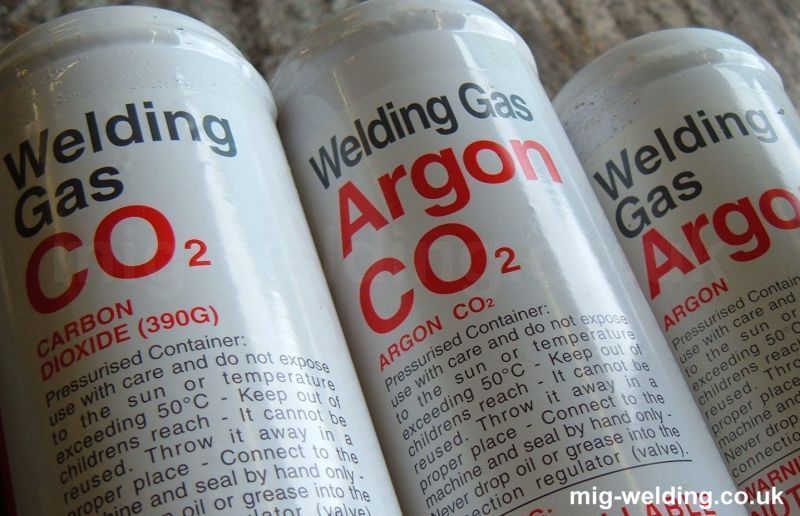
All welds were made in the same hour with the same welder settings on 1.5mm steel using a curving ziz-zag motion. The gases were sourced from a DIY store and were all used at the same regulator setting, apart from the Argoshield Light which was in a big bottle with a different regulator.
A Clarke 155T welder was used on it's second to lowest setting unless otherwise stated.
CO2 vs Argon/CO2 Mix (1.5mm steel or thicker)
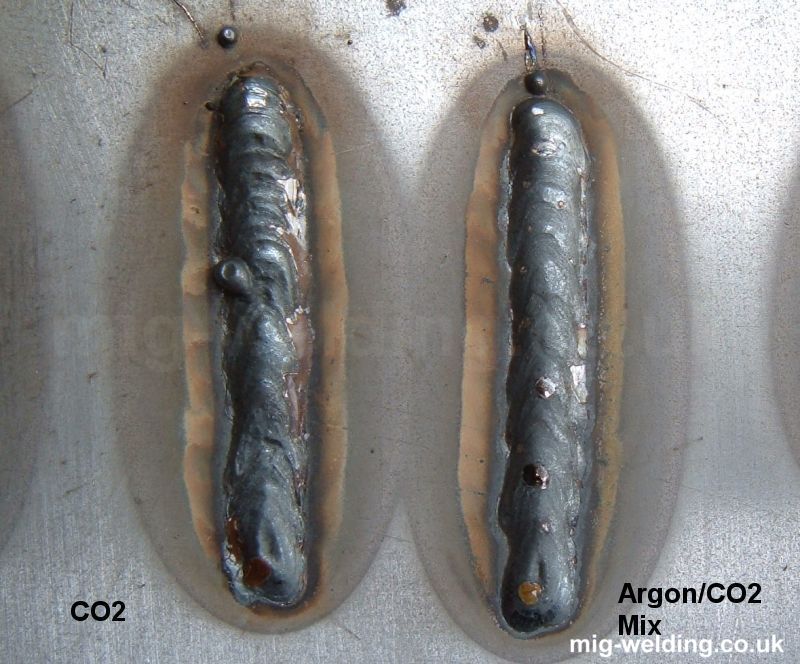
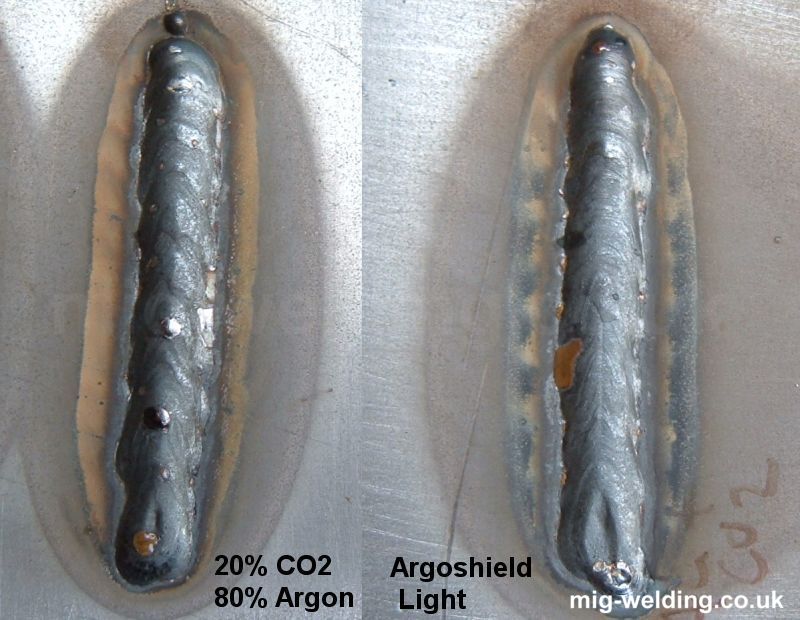
The weld to the right was made using 80% Argon, 20% CO2 shielding gas. It was nice and easy to do. The arc was very stable and controllable and the weld turned out quite neat.
100% CO2 gas was used for the weld on the left. The arc felt much less stable with CO2 shielding gas, and the weld progressed in a stuttering fashion with blobs of molten weld (spatter) being blown off at regular intervals. That's a bit of spatter stuck to the weld about half way up on the left. The arc also seemed slightly brighter than with the argon mix.
For much more detail - Shenion from the forum has a page comparing various percentage mixes of CO2 and Argon.
CO2 vs Argon/CO2 Mix (0.8mm to 1.2mm steel)
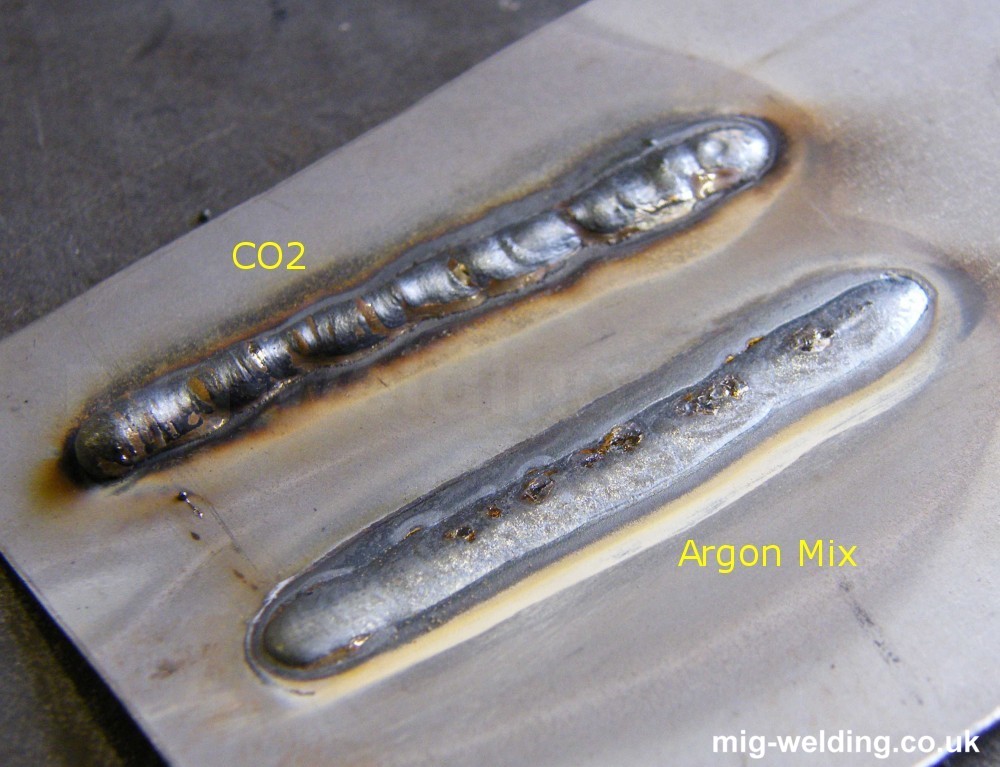
CO2 doesn't maintain an arc as well as Argon Mix. On low voltages (probably the lowest couple of settings on most MIG welders) the wire will tend to ball on top of the surface and not penetrate the metal. The arc doesn't appear to start until the wire has touched the work, and it extinguishes as the wire burns back resulting in the 'weld' being made in a series of pops and spatters that the photo doesn't do justice to. Wire speed setting or technique do not appear to influence the effect. Simply CO2 does not work on low voltage settings.
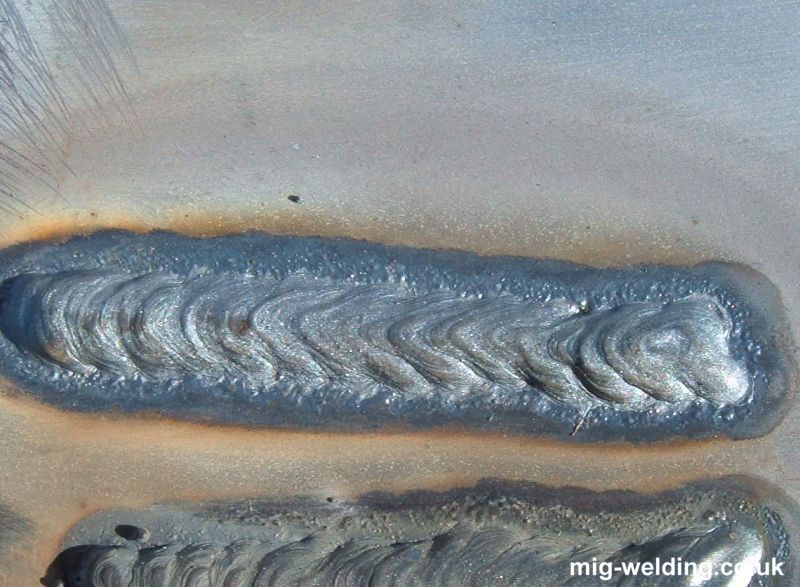
BOC Argoshield Light was used in weld on the right which was smooth and consistent to lay. The Argon content is necessary to maintain the arc at low voltage. The photo is 0.8mm steel and the welds were completed with a Portamig 181 on it's lowest setting.
Argon/CO2 Mix vs BOC Argoshield Light
There wasn't much to choose between the 80%Argon/ 20%CO2 mix from Halfords and Argoshield Light from BOC. That's not too surprising as their composition is similar. Argoshield Light is approximately 93% Argon, 5% CO2 and 2% oxygen.
The oxygen in Argoshield is supposed to improve wetting and make the weld smoother, and indeed the weld made using Argoshield is very slightly smoother than the other weld.
The two gases should come out much the same as they are equivalent gases, both designed for thin metal welding. The 2% oxygen in BOC Argoshield (tri-mix) has a similar effect to adding 15% CO2 to pure Argon. Tri-mix gases containing oxygen are common in the UK, but gases with higher CO2 and without the oxygen are more common in the US.
Pure Argon Gas
Pure Argon is intended for aluminium welding rather than for steel, but I had a bottle so it's included for completeness.
The arc was slightly less even than the Argon/CO2 mixes, and tended to stray. It was tricky to control exactly where the arc struck the steel especially on thin metal.
The weld build up was much higher than with any of the other shielding gasses (bad), and there was an odd roughness around the edge of the weld - possibly due to stray arcing. The difference was enough for me to trade in a half full bottle of Argon for a new bottle of Argoshield now that my aluminium welding is finished.
Argoshield is a BOC tradename - it's just what I had knocking around. DIY welders would be unlikely to notice any difference between Argoshield and Argon/CO2 mixes from other gas suppliers.


