


Welding safety
This is not a comprehensive guide. There are many ways in which welding can damage your health. The main points are:
- Protect all skin from UV light
- Closing your eyes for a few sneaky tacks will not prevent arc eye
- Work in a well ventilated area (extraction fans not blowing fans as those would blow your shielding gas away).
- Wear a vapour mask if your extraction isn't great.
- Be careful not to have flammable stuff nearby. Welding and grinding sparks can travel a long distance.
Welding arc eye
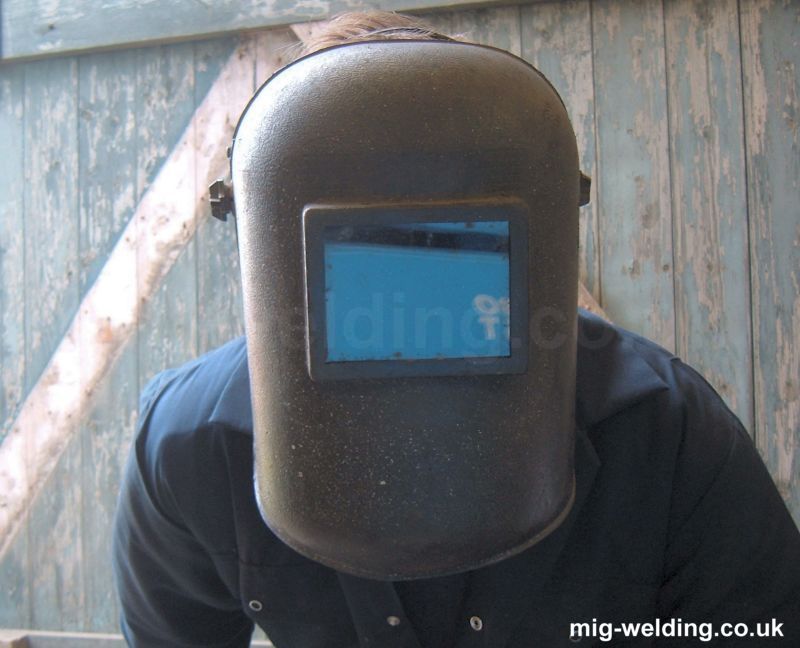
The light generated by MIG welding is extremely bright. Looking directly at a welding arc even for a short time causes arc eye when the bright flash from the arc burns the cornea. The cornea is very sensitive to sun burn. Expect to be awake all night with the sensation that someone is sticking pins in your eye.
For sensible people wearing a full face welding mask it tends to be the reflected light that causes arc eye. Welding all day in a room with white painted walls can be enough. Welders caps aren't just to stop sparks.
Be very careful to warn anyone else in the area when you are about to start welding, and use a welding screen if welding in an area where there might be passers by. Be especially careful with pets and children - they can be as daft as a brush.
Metal vapor and your lungs, kidneys, brain etc.
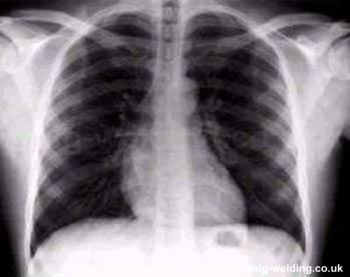
MIG welding and angle grinding results in metal vapors.
Aluminium alloy vapour and fumes from zinc coatings are poisonous. Exposure can result in heavy metal poisoning (welding shivers) - flu like symptoms that can persist for a few days. The zinc coating should be removed from galvanised steel before welding, and wear a proper charcoal welding mask when you go anywhere near zinc.
It doesn't stop there - the fumes from flux cored gasless wire and ARC welding are nasty. Stainless gives off chromium, MIG and TIG arcs give off ozone. Welding should be carried out in a well ventilated area.
This stuff is cumulative. Professional workshops normally have extraction systems. A DIY approach might be to leave the garage door open when welding. For prolonged welding It's a good idea to wear a vapour mask.
Protection from UV light and molten metal
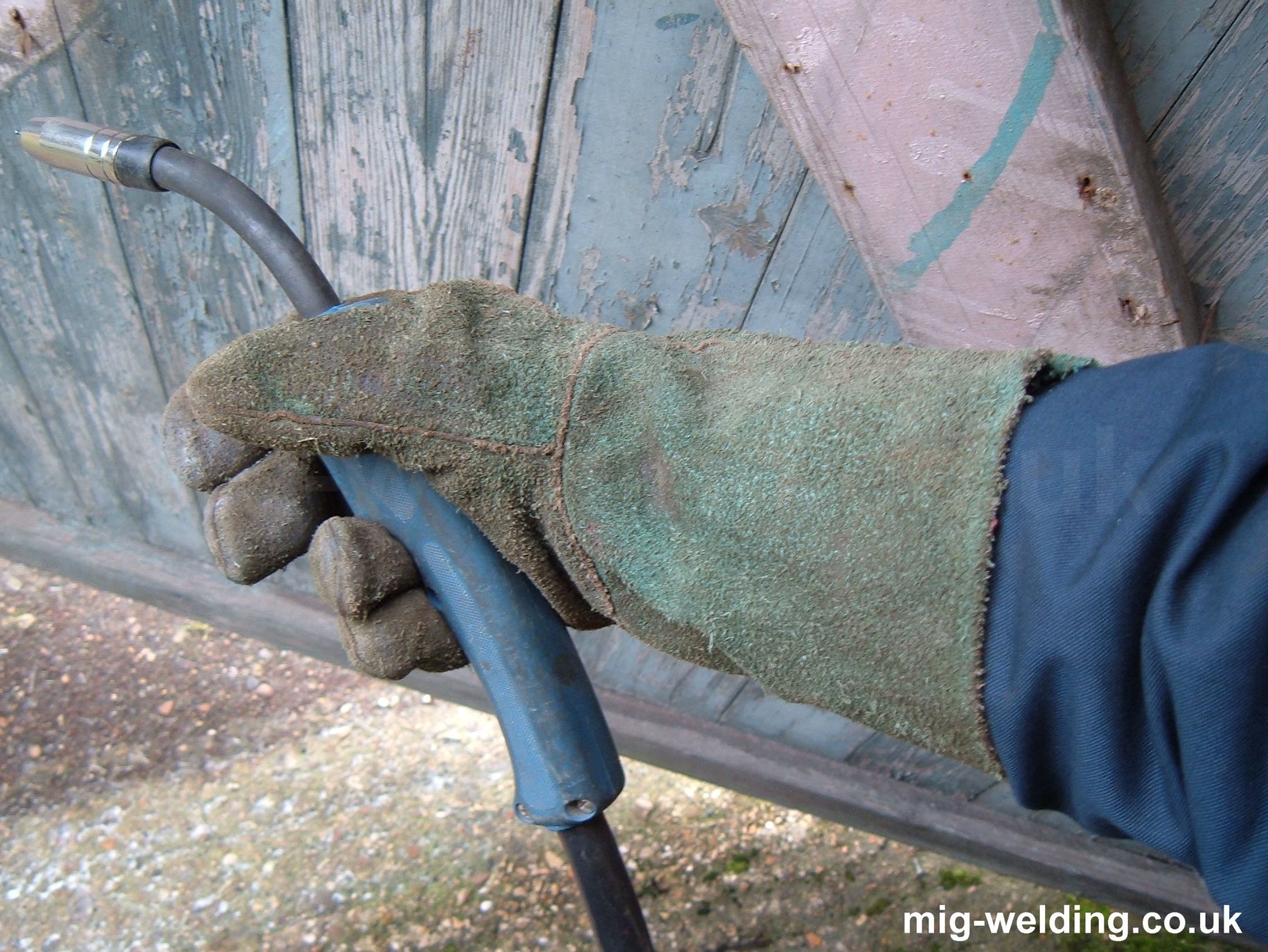
The light from MIG welding has a strong ultraviolet content and causes sunburn. I've welded in a T-shirt in the past and the burns from an afternoon of thick metal were very painful. Full coverering of arms and legs is essential. If it's hot wear thin clothes in preference to stripping to exposed skin.
Although the weld is also likely to spit small blobs of metal out. Welding gauntlets protect the hands and wrists, and it is sensible to wear cotton overalls or clothing. Take care not to leave gaps in your clothing or shoes where a blob of metal could enter. Blobs of molten metal can burn through any thin clothing and cause small but painful burns.
The metal you weld stays hot for a good while. Most of my burns have been caused by forgetting this and picking up a hot piece of metal in my bare hands.
Fire safety
Molten metal can spit several feet from a weld. Grinding sparks are even worse. Do a risk assessment on your surroundings - though you could wait until you've had a few destructive fires like I did. Any sawdust, paper or plastic bags in the area can smolder and catch fire so keep a tidy area for welding. You think you'll notice flames but flames aren't bright when looking through a shade 10 visor.
After welding or grinding a little fire could be smouldering away unnoticed. Check back in the workshop an hour or two after finishing for the day to check there isn't a fire in the making.
Keep a fire extinguisher beside the exit door from your workshop. CO2 is the best type for welding. A bucket of sand is also a good idea - it could save the expense of having the fire extinguisher refilled.
The photo shows a foam extinguisher (it contains water so it's not safe for use near electrical equipment like ...err... electric welders). It's since been replaced by a 2kg CO2 extinguisher. Don't squirt water or foam extinguishers anywhere near electricity for obvious reasons.
My extinguisher sits ready to use with the plastic tie removed. You'd be amazed how long it takes to figure out how to remove the plastic tie when you really need to. Fires spread quickly and you will be in a panic (been there)!

Angle grinding
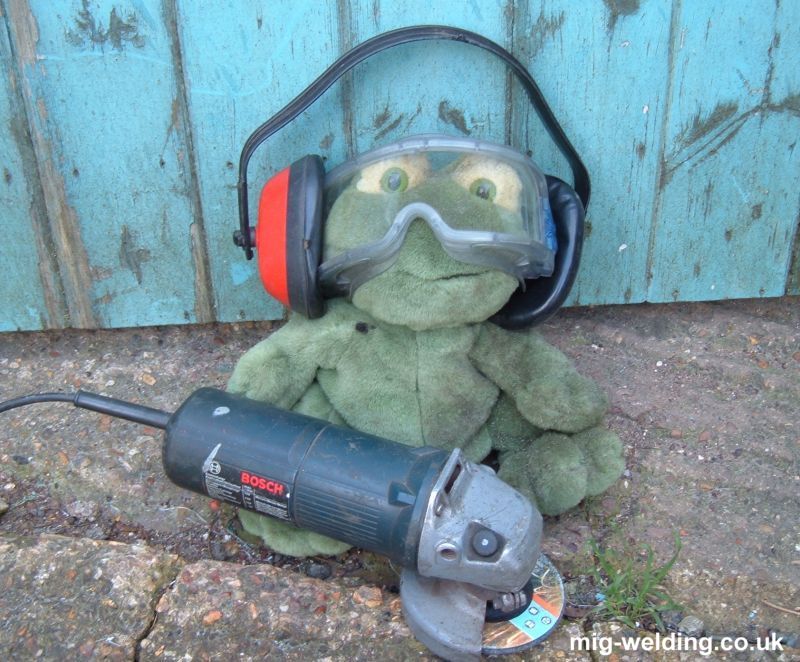
Workshop tools are noisy and will damage hearing. I was lucky enough to be given some good advice by an almost completely deaf mechanic at the start of my career. He shouted "always wear ear protection when using a grinder, a hammer or even a drill". Don't use cheap ones like the daft frog in the photo - you can pick up nice Peltor ones from Screwfix for £10.
Eye protection is important for grinding. Make sure you buy decent goggles with impact resistant lenses and without direct air breathing holes. The cheaper ones just let sparks in. Also always make sure the sparks are directed away from you as you grind.
Keep fire in mind again when using a grinder. I've never started a fire when welding, but have done a couple of times by not paying attention to where grinding sparks were landing. Clear up grinding dust too - aluminium dust mixed with steel dust burns so well it's actually used as a welding power source (thermite).
Common sense (a disclaimer)
Use your common sense when welding. This page may not be comprehensive. Take advice from your welding supplier and experienced welders before starting to weld. See the more detailed disclaimer too.